



Table of Contents
- What Medical Grade Skincare for Deep Lines Actually Means
- Medical Grade vs. Over-the-Counter: What Changes at Higher Concentrations
- Best Ingredients for Deep Wrinkles (and What Each One Does)
- Medical Grade Retinol Benefits for Deep Lines and Texture
- How to Treat Deep Facial Lines: Building a Routine That Layers Correctly
- What You'll Need
- Step 1: Cleanse and Wait [Time: 2 minutes]
- Step 2: Apply Retinol First [Time: 1 minute]
- Step 3: Wait, Then Layer Hydration [Time: 5 minutes]
- Step 4: Protect Every Morning [Time: 2 minutes]
- What You'll Need
- Step 1: Cleanse and Wait [Time: 2 minutes]
- Step 2: Apply Retinol First [Time: 1 minute]
- Step 3: Wait, Then Layer Hydration [Time: 5 minutes]
- Step 4: Protect Every Morning [Time: 2 minutes]
- Budget-Conscious Medical Grade: Where to Start Without Wasting Money
- Long-Term Maintenance vs. Immediate Results: What to Expect and When
- Conclusion
- Frequently Asked Questions
Last Updated: September 20, 2026
What Medical Grade Skincare for Deep Lines Actually Means
Medical grade skincare for deep lines delivers higher concentrations of actives like retinoids and peptides in delivery systems built to reach the dermal layer where wrinkles form. This guide from Ageless Forever by Dr. Campos covers which ingredients target deep wrinkles and how to layer them.

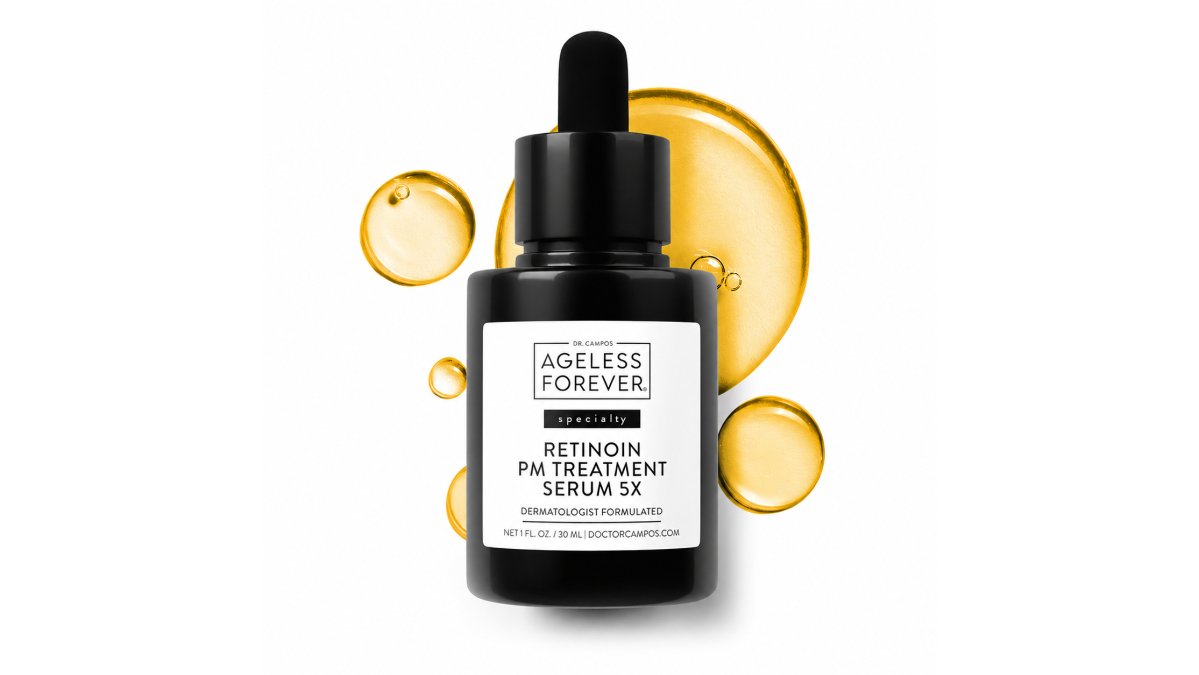
Medical Grade vs. Over-the-Counter: What Changes at Higher Concentrations
The core difference is concentration, penetration, and formulation stability, not marketing language. OTC products cap retinoid concentrations to avoid irritation complaints, while professional lines formulate higher concentrations with buffering agents that make them tolerable.
Three variables separate the categories:
- Concentration levels: OTC retinol often sits below 0.3%; professional formulas range higher and are labeled accordingly
- Bioavailability: encapsulation and lipid delivery systems protect the active until it reaches the skin
- Formulation stability: packaging and pH control keep the active from degrading before you finish the bottle
Best Ingredients for Deep Wrinkles (and What Each One Does)
The ingredients that move deep lines fall into four families: retinoids (turnover and collagen), peptides (collagen signaling), hyaluronic acid (hydration and plumping), and antioxidants (photodamage defense). What separates a real formula from a label claim is concentration, delivery system, and pH stability.
Retinoids: Retinol, Encapsulated Retinol, and Tretinoin
Retinol is the OTC precursor that skin enzymes convert to retinoic acid; tretinoin is the prescription form, already active. Encapsulated retinol sits between them: the active is trapped in a lipid or polymer shell and released gradually, lowering peak irritation while preserving cumulative exposure.
- Concentration: Over-the-counter retinol commonly sits between 0.1% and 0.3%; professional and prescription-strength formulas run higher and are labeled accordingly.
- Conversion efficiency: Only a fraction of applied retinol converts to retinoic acid, so a 1% retinol is not equivalent to 1% tretinoin.
- Delivery and pH: Retinoids degrade with light, heat, and oxygen (pubmed.ncbi.nlm.nih.gov). Airless pumps, opaque tubes, and encapsulated formats protect the molecule so the percentage on the label is closer to the percentage that reaches your skin.
Peptides: Signal, Carrier, and Enzyme-Inhibitor Types
Peptides are short amino acid chains. They are not all the same, and the category name hides three different jobs:
- Signal peptides tell fibroblasts to produce more collagen and elastin.
- Carrier peptides ferry trace minerals like copper into the skin to support repair enzymes.
- Enzyme-inhibitor peptides slow the breakdown of existing collagen.
Hyaluronic Acid: Molecular Weight Changes the Job
Hyaluronic acid holds many times its own weight in water, but molecular weight determines where it works:
- High molecular weight sits on the surface and forms a hydrating film that plumps fine lines immediately.
- Low and ultra-low molecular weight penetrates further and supports hydration in the upper layers, though it does not restructure deep wrinkles.
Antioxidants: Defense, Not Repair
Antioxidants such as green tea polyphenols, vitamin C, and vitamin E limit the oxidative stress that accelerates photodamage. They do not rebuild collagen, but they reduce the daily damage load retinoids must work against, and applied in the morning they complement sunscreen rather than replacing it.
Medical Grade Retinol Benefits for Deep Lines and Texture
Medical grade retinol benefits for deep lines come down to sustained cellular turnover: regular use refines texture, softens the appearance of deep wrinkles over time, and improves uneven tone and discoloration.
How to Treat Deep Facial Lines: Building a Routine That Layers Correctly
Most guides list ingredients but skip the order of operations, which is where deep-line routines succeed or fail. Layering is not about product count, it is about pH, molecular size, and which actives destabilize each other on the skin.
Total Time: 10 minutes nightly Difficulty: Beginner to intermediate
What You'll Need
- Gentle, low-pH-friendly cleanser
- Retinol or retinoid serum
- Peptide or hyaluronic acid serum
- Moisturizer
- Sunscreen (morning)
Step 1: Cleanse and Wait [Time: 2 minutes]
Apply cleanser, rinse, and let skin dry completely. Expected Result: Skin is dry to the touch, so the retinol does not drive into damp skin and sting. Residual moisture increases penetration and irritation at the same time.
Step 2: Apply Retinol First [Time: 1 minute]
Retinol goes on clean, dry skin before anything occlusive. Expected Result: Maximum absorption without a moisturizer blocking the pathway. Wait 1-2 minutes if you are new to retinoids; experienced users can layer sooner.
Step 3: Wait, Then Layer Hydration [Time: 5 minutes]
Pause a few minutes, then apply peptide or hyaluronic acid serum, followed by moisturizer. Expected Result: Barrier support that reduces next-morning flaking. Apply the thinnest formula first and the richest last.
Retinoin PM Treatment Serum 5X →
Step 4: Protect Every Morning [Time: 2 minutes]
Sunscreen is non-negotiable. Retinoids increase photosensitivity, and unprotected UV exposure undoes the collagen work you are paying for.
The Layering Rules Most Guides Skip
Rule 1: Order by pH, then by texture. Low-pH actives go first because they need an acidic environment to work. Once you apply a moisturizer, you have raised the surface pH and buffered the pathway. This is why a retinol applied after moisturizer is a weaker retinol.
When to Introduce Each Active
- Weeks 1-4: Cleanser, moisturizer, sunscreen. Establish the baseline.
- Weeks 4-8: Add the retinoid at the lowest concentration you can buy.
- Weeks 8-12: Add a hydrating serum (peptides or hyaluronic acid).
- After week 12: Add an antioxidant in the morning if your skin tolerates everything else.
What You'll Need
- Gentle cleanser
- Retinol or retinoid serum
- Peptide or hyaluronic acid serum
- Moisturizer
- Sunscreen (morning)
Step 1: Cleanse and Wait [Time: 2 minutes]
Apply cleanser, rinse, and let skin dry completely. Expected Result: Skin is dry to the touch, so the retinol does not drive into damp skin and sting.
Step 2: Apply Retinol First [Time: 1 minute]
Retinol goes on clean, dry skin before anything occlusive. Expected Result: Maximum absorption without a moisturizer blocking the pathway.
Step 3: Wait, Then Layer Hydration [Time: 5 minutes]
Pause a few minutes, then apply peptide or hyaluronic acid serum, followed by moisturizer. Expected Result: Barrier support that reduces next-morning flaking.
Step 4: Protect Every Morning [Time: 2 minutes]
Sunscreen is non-negotiable. Retinoids increase photosensitivity, and unprotected UV exposure undoes the collagen work you are paying for.
Budget-Conscious Medical Grade: Where to Start Without Wasting Money
You do not need six products to treat deep lines. You need one well-formulated retinoid, one hydrating serum, one moisturizer, and sunscreen.
| Priority | Product Type | Why It Earns the Money | Skip If |
|---|---|---|---|
| 1 | Encapsulated retinol serum | Drives collagen and turnover | Never skip |
| 2 | Sunscreen | Protects every gain | Never skip |
| 3 | Moisturizer | Keeps barrier intact | Skin is oily |
| 4 | Peptide serum | Supports collagen synthesis | Budget is tight |
| 5 | Antioxidant serum | Limits photodamage | Retinol already tolerated |
Long-Term Maintenance vs. Immediate Results: What to Expect and When
Hydration delivers immediate results. Structural change does not. Hyaluronic acid can plump fine lines within days, but deep wrinkles respond to collagen remodeling, which runs on a slower clock.
Expect this timeline:
- Weeks 1-4: Possible peeling and purging; texture may look worse before better
- Weeks 4-8: Tone and texture begin to even out
- Months 3-6: Deep lines soften visibly; firming becomes noticeable
- Beyond 6 months: Continued improvement with consistent use
Conclusion
Deep lines are a structural problem, and structural problems need consistency more than intensity. Build a routine around one well-formulated retinol, protect it with sunscreen, and give it months rather than weeks.
Frequently Asked Questions
What are the key ingredients in medical grade skincare for deep lines?
The actives that carry most of the load are retinoids such as retinol and tretinoin, peptides that support collagen production, hyaluronic acid for hydration, and antioxidants that defend against photodamage. Concentration levels and formulation stability separate medical grade products from drugstore options. A night serum with encapsulated retinol, followed by a moisturizer and daily sun protection factor, covers the basics most dermatologists recommend for deep wrinkles and loss of firmness.
How long does it take to see results from medical grade retinol?
Expect the first changes in skin texture and brightness around four to eight weeks, with deeper lines and firmness improving over three to six months of consistent nightly use. Retinol works by speeding cellular turnover and supporting collagen synthesis in the dermal layer, so the visible payoff builds gradually. Starting two to three nights a week and increasing as your skin tolerates it reduces redness and peeling while you acclimate.
Can medical grade skincare really reduce the appearance of deep wrinkles?
It softens them rather than erasing them. Deep wrinkles formed over years involve changes in the dermal layer that topicals cannot fully reverse, but prescription-strength retinoids and well-formulated serums can visibly improve depth, texture, and hyperpigmentation with consistent use. Results depend on the active ingredients, their concentration, and how faithfully you apply them. Pairing a retinoid at night with moisturizer and daily sun protection gives you the strongest at-home routine.
Is medical grade skincare worth the higher price compared to what I buy at a beauty retailer?
You are paying for higher active concentrations, better bioavailability, and formulations tested to dermatological standards rather than for fragrance or packaging. A $64.95 to $94.95 treatment serum costs more per bottle than a mass-market cream, but a single effective product often replaces three or four ineffective ones. If price is the sticking point, start with one retinoid serum and a moisturizer rather than a full regimen, then add products as your budget allows.