



Table of Contents
- Understanding Deep Facial Lines: Dynamic vs. Static
- Step 1: Start with the Best Medical-Grade Skincare for Wrinkles
- Step 2: Non-Surgical Deep Wrinkle Treatments to Consider
- Step 3: Professional Procedures That Resurface Skin
- Combination Therapy: Why It Often Works Best
- How to Prevent Deep Facial Lines from Progressing
- Building Your Treatment Plan and Setting Expectations
- Frequently Asked Questions
Last Updated: September 7, 2026
Understanding Deep Facial Lines: Dynamic vs. Static
Deep facial lines form through repetitive muscle movement, natural aging, and cumulative sun exposure. These creases settle into the forehead, between the brows, and around the mouth, differing from fine lines because they represent structural changes where collagen and elastin have degraded. Distinguishing whether deep facial lines are dynamic or static helps determine which treatments will work.
Dynamic wrinkles appear with expression and vanish when your face relaxes. Static wrinkles remain visible at rest, signaling lost resilience and shifted volume. Most people over 50 present with both types, so a single treatment rarely suffices. Dynamic lines respond best to relaxing muscle activity, while static lines require rebuilding skin structure and replacing lost volume.
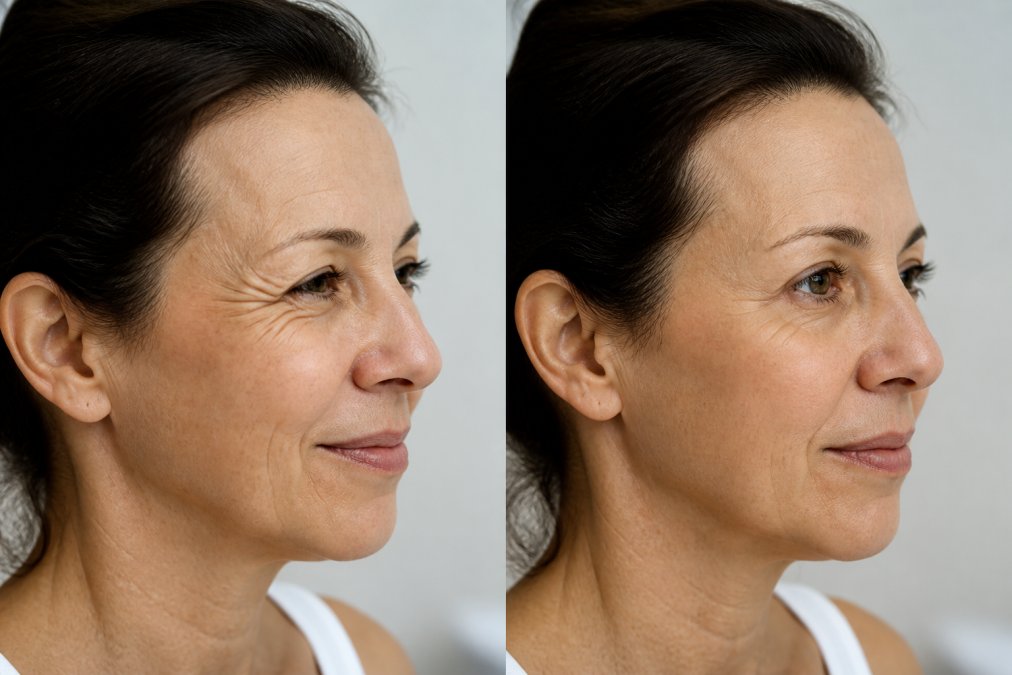
This classification shapes expectations. A neurotoxin can soften a dynamic line within days, but it will not erase a static crease etched into the skin for years. Understanding this difference is the first step toward a realistic treatment path.
Step 1: Start with the Best Medical-Grade Skincare for Wrinkles
The foundation of any plan to treat deep facial lines is a consistent, medical-grade skincare routine that stimulates collagen and supports the skin barrier. Over-the-counter products often contain actives at concentrations too low to penetrate the dermis. Medical-grade formulations deliver actives at prescriptive strength and meet higher purity and stability standards, justifying their cost.
Prioritize proven ingredients: retinoids to accelerate cell turnover, vitamin C for collagen synthesis, and peptides that signal repair. Consistency matters more than product count; visible improvement in deep lines takes 8 to 12 weeks of daily use.
Prescription-Strength Retinoids
Retinoids are the gold standard for deep facial lines because they stimulate dermal collagen production. Tretinoin, the most studied prescription retinoid, normalizes cell turnover and thickens skin, softening static wrinkles. Many patients experience purging with redness and peeling initially, so starting at a lower frequency and building tolerance is essential.
Targeted Serums and Peptides
While retinoids rebuild structure, targeted serums address hydration, texture, and firmness. Hyaluronic acid draws in moisture and plumps lines temporarily; peptide complexes signal fibroblasts to produce new collagen. For the best medical-grade skincare for wrinkles, choose formulations without irritating fragrances or essential oils that can compromise the barrier.
Step 2: Non-Surgical Deep Wrinkle Treatments to Consider
When topicals are not enough, non-surgical deep wrinkle treatments offer the next level of intervention without surgical recovery. These procedures target the two root causes: muscle movement that creases skin and volume loss that makes creases pronounced. The right choice depends on whether your lines are dynamic, static, or mixed.
Injectable Neurotoxins
Neurotoxins like Botox and Dysport temporarily relax muscles responsible for dynamic wrinkles. By preventing full contraction, the skin smooths, and with repeated treatments the line can fade. Results appear in 3 to 7 days and last 3 to 4 months. They are most effective on forehead lines, crow's feet, and vertical lines between the brows.
Dermal Fillers for Volume Loss
Dermal fillers, usually hyaluronic acid, restore volume depleted by aging from the midface, cheeks, and around the mouth. For static deep facial lines, fillers lift and support the crease from beneath, producing immediate correction. Results last 6 to 18 months depending on product density and area. A skilled injector will assess whether you need relaxation, volume replacement, or both.
The Real-World Trade-Off: Cost Per Month of Efficacy
Most guides stop at listing options, but the decision often comes down to budget over time. Comparing treatments by calculating cost per month of efficacy, which accounts for both price and how long results last, can be helpful.
This framework can reveal that certain treatments may be more economical for static lines, while others are options for dynamic wrinkles. Many patients need both, so a combination approach frequently delivers value.
Downtime and Discomfort: What to Actually Expect
Neurotoxin injections take about 10 minutes, involve minimal discomfort, and have virtually no downtime, you can return to work immediately, though avoid lying down or exercising for 4 hours afterward to prevent migration.
Fillers involve more sensation. Most contain lidocaine, but you may feel pinching or burning during injection. Swelling and bruising can last 3 to 7 days, so schedule filler appointments at least a week before important events. Ice packs and arnica cream reduce bruising, but you cannot hide significant swelling entirely.
Candidacy and Safety Considerations
Not everyone is a candidate for injectables. Neurotoxins are contraindicated during pregnancy or breastfeeding and for those with neuromuscular conditions like myasthenia gravis. Fillers require careful vascular assessment; a rare but serious complication is intravascular occlusion, which can cause tissue necrosis. Choosing a board-certified dermatologist or plastic surgeon reduces this risk substantially.
The Psychological Adjustment After Injectables
What most articles omit is the emotional adjustment after your first injectable. Some patients feel a sense of loss when familiar expression lines disappear. Others experience anxiety during the 3-to-7-day window before neurotoxin results appear. This is normal. Give yourself time to adapt and communicate openly with your provider during the follow-up visit.
| Treatment | Best For | Onset of Results | Typical Longevity | Typical Cost per Session | Cost per Month of Efficacy (est.) |
|---|---|---|---|---|---|
| Neurotoxins | Dynamic wrinkles | 3-7 days | 3-4 months | Consult provider for pricing | Consult provider for pricing |
| Dermal fillers | Static lines, volume loss | Immediate | 6-18 months | Consult provider for pricing | Consult provider for pricing |
| Fractional laser | Texture, deep static lines | 1-3 months | 1-2 years | Consult provider for pricing | Consult provider for pricing |
| Microneedling | Overall texture, mild to moderate lines | 2-3 months | 6-12 months | Consult provider for pricing | Consult provider for pricing |
Step 3: Professional Procedures That Resurface Skin
For deep static lines that persist despite skincare and injectables, resurfacing procedures remodel the skin by removing damaged layers and triggering a wound-healing response. These treatments generate new collagen and elastin, improving texture, tone, and laxity over several months. Downtime varies significantly between options.
Laser and Light Therapies
Fractional laser resurfacing creates microscopic columns of thermal injury, leaving surrounding tissue intact to speed healing. It is highly effective for deep lines because it stimulates substantial dermal collagen remodeling. Ablative lasers offer the most dramatic results but require several days of downtime; non-ablative options are gentler with more modest outcomes. Radiofrequency devices heat deeper layers to tighten tissue and are often combined with microneedling.
Microneedling and Chemical Peels
Microneedling, or collagen induction therapy, uses fine needles to create controlled micro-injuries that trigger the skin's repair cascade. Combined with radiofrequency energy, it penetrates deeper and produces more significant remodeling of deep facial lines. Chemical peels using trichloroacetic acid or phenol remove outer damaged layers. Deeper peels yield the most dramatic improvements but carry higher pigmentation risks and require the longest recovery.
Combination Therapy: Why It Often Works Best
The most effective approach rarely relies on a single modality. Dermatologists increasingly recommend combination therapy addressing muscle movement, volume loss, and skin quality simultaneously. A common protocol pairs neurotoxins for dynamic lines, fillers for volume beneath static creases, and medical-grade skincare or laser resurfacing for overall texture and collagen density.
Combination therapy also delivers better value over time. Neurotoxins provide immediate smoothing, fillers offer structural correction, and resurfacing improves the skin's baseline quality so that maintenance treatments become less frequent. According to the American Society for Dermatologic Surgery patient education library, tailoring treatments to the specific type and location of wrinkles improves both outcomes and patient satisfaction. The key is sequencing: resurfacing first to improve skin quality, followed by fillers and neurotoxins once the skin has healed.
How to Prevent Deep Facial Lines from Progressing
Prevention is more effective than correction, and the habits that protect your skin are largely within your control. Daily broad-spectrum sunscreen is non-negotiable, as photoaging accounts for the majority of visible skin aging. The Skin Cancer Foundation's guidelines on daily sun protection emphasize that consistent sunscreen use prevents new damage and allows existing collagen to repair itself.
Beyond sun protection, avoid repetitive facial expressions where possible, sleep on your back, and maintain hydration. Nutritional support for collagen includes adequate protein and antioxidants from fruits and vegetables. Smoking accelerates collagen breakdown and should be eliminated. While these habits cannot reverse existing deep facial lines, they slow progression and extend treatment results.
Building Your Treatment Plan and Setting Expectations
A realistic treatment plan combines daily medical-grade skincare, periodic in-office procedures, and honest expectations. Start with a consultation to classify your lines as dynamic, static, or mixed, then prioritize based on your concerns, budget, and tolerance for downtime.
The Emotional Side of Treating Deep Lines
What most clinical guides omit is the psychological dimension of treating deep facial lines. These creases often carry emotional weight, they may remind you of aging parents, trigger discomfort in photographs, or make you feel invisible professionally. Treating them can bring relief but can also surface unexpected feelings.
Some patients experience post-procedure anxiety, worrying results look unnatural. Others go through adjustment when friends and family notice their changed appearance. This is common with neurotoxins, which can temporarily alter your ability to make certain expressions. A 2023 survey in Aesthetic Surgery Journal found that nearly 30% of first-time injectable patients reported some anxiety about results in the first two weeks.
Setting realistic expectations before treatment is the most effective way to reduce anxiety. The goal is not perfection, it is improvement. A deep nasolabial fold may soften by 50% to 70% with filler, but it will not disappear entirely. Forehead lines treated with neurotoxins will smooth, but you may still see faint traces when raising your eyebrows. Accepting these outcomes beforehand prevents disappointment.
Sequencing Your Treatments for Maximum Results
If planning multiple procedures, order matters more than most patients realize. A common protocol starts with resurfacing like laser or microneedling first, because they improve skin quality and thickness. Wait at least 2 to 4 weeks after the skin has fully healed before injectables. This allows resurfacing to stimulate collagen, providing a better foundation for fillers and neurotoxins.
Alternatively, some practitioners recommend injectables first for immediate gratification, followed by resurfacing once they have settled. This works well for patients who want quick visible results while waiting for slower collagen remodeling. Discuss both options with your provider and ask which sequence they recommend for your pattern of aging.
The Maintenance Mindset
Deep facial lines are not cured; they are managed. Neurotoxins require repeat treatments every 3 to 4 months. Fillers need touch-ups every 12 to 18 months. Laser results last 1 to 2 years. Skincare must continue daily, indefinitely. Planning for this ongoing commitment financially and logistically is essential.
Create a yearly treatment calendar. Mark neurotoxin appointments every 4 months, schedule filler touch-ups in the fall before holiday events, and plan laser sessions during cooler months. Budgeting for ongoing commitment is essential.
When to Consider Surgical Options
If non-surgical treatments no longer deliver the correction you desire, surgical options such as a facelift or brow lift may be appropriate. These procedures reposition underlying tissue and remove excess skin, providing more dramatic and longer-lasting results. A facelift can provide longer-lasting results.
Surgery carries significant risks including bleeding, infection, nerve damage, and scarring, plus a recovery period of 2 to 4 weeks. It is not a decision to make lightly, but for patients with severe skin laxity and deep static folds, it may be the only option producing meaningful improvement.
Deep facial lines develop over decades, and treating them requires a similar commitment. Visible improvement from skincare alone typically takes 3 months, while professional procedures deliver faster results that must be maintained. The American Academy of Dermatology's guidance on choosing anti-aging treatments advises patients to be wary of products promising overnight transformation and to seek evidence-based options. A thoughtful combination of medical-grade skincare, expert procedures, and sun protection remains the most reliable path to smoother, firmer skin.
Frequently Asked Questions
What do dermatologists recommend for deep wrinkles?
Dermatologists typically recommend a layered approach. For deep facial lines, they often start with a prescription-strength retinoid to boost collagen production. They may also suggest in-office procedures like injectable neurotoxins for dynamic wrinkles or dermal fillers for static lines caused by volume loss. The best medical-grade skincare for wrinkles complements these procedures. A board-certified dermatologist can assess your skin and create a personalized plan that combines at-home care with professional treatments for optimal results.
What is the best non-surgical treatment for deep wrinkles?
The best non-surgical deep wrinkle treatment depends on the wrinkle type. For expression lines like frown lines, neuromodulators are highly effective. For deep nasolabial folds or marionette lines, dermal fillers restore lost volume. For overall skin texture and fine lines, laser resurfacing or microneedling can stimulate collagen. Often, the most effective strategy combines these treatments, such as using a neuromodulator alongside a medical-grade skincare routine with retinoids to maintain results between appointments.
How do medical-grade skincare products complement in-office procedures?
Medical-grade skincare helps prepare the skin before a procedure and maintains results afterward. For example, using a retinoid can thicken the skin, which may help it respond better to laser treatments. After an in-office procedure, these products support healing and prolong the effects by continuing to stimulate collagen production. This combination addresses deep facial lines from multiple angles, targeting both the structural changes and the daily maintenance required to keep skin looking smoother for longer.
At what age should you start treating deep facial lines?
There is no single right age, but many people begin noticing deeper lines in their late 30s to 40s as collagen and elastin production slows. Starting a preventive routine with medical-grade skincare, including a retinoid and daily sunscreen, in your late 20s or early 30s can delay their formation. If deep facial lines are already present, it is never too late to start. A consistent routine can improve skin texture and soften the appearance of existing lines over several months.