



Table of Contents
- How to Treat Hyperpigmentation at Home: What Actually Works
- Causes of Dark Spots on the Face
- At-Home Remedies Backed by Evidence (and Ones to Skip)
- Best Products for Hyperpigmentation: Ingredients That Fade Dark Spots
- How Long Hyperpigmentation Takes to Fade
- Hyperpigmentation Treatment and Prevention: Building a Daily Plan
- When to See a Dermatologist About a Dark Spot
- Frequently Asked Questions
Last Updated: October 15, 2026
How to Treat Hyperpigmentation at Home: What Actually Works
Learning how to treat hyperpigmentation at home comes down to three things: the right active ingredients, daily sun protection, and patience. Dark spots fade slowly, and no single product erases them overnight.
At Ageless Forever by Dr. Campos, we build routines around evidence, not trends. This guide walks through what causes dark spots, which remedies hold up, and how to sequence a routine that will not wreck your skin barrier. Consistent application of these principles forms the foundation of our safe treatment guide, which outlines the precise order and concentration required to fade discoloration without compromising dermal integrity.
Hyperpigmentation is the overproduction of melanin that leaves patches of skin darker than the surrounding tone. It shows up as sunspots, acne marks, or broad patches on the face and hands.
According to the American Academy of Dermatology, most people see meaningful fading only after consistent treatment over several months. That timeline surprises almost everyone.
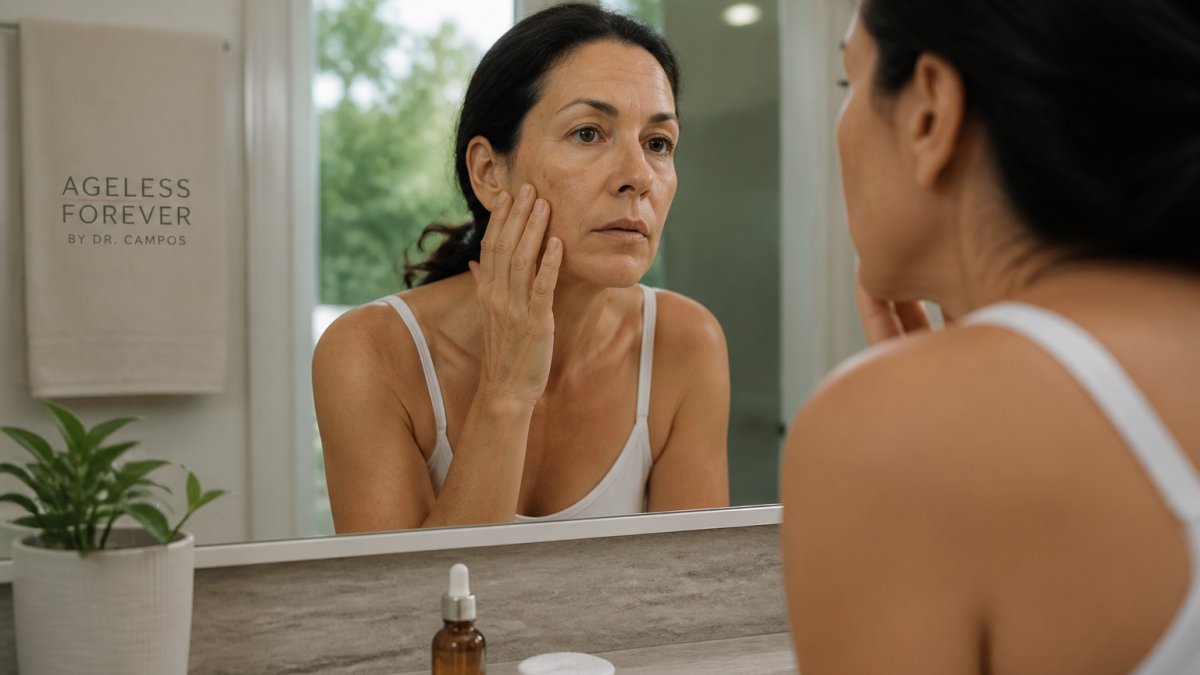
Types of Hyperpigmentation and What Each One Needs
Not all dark spots are the same, and treating them the same way wastes time.
- Sunspots form from UV exposure over years. They need brightening actives plus strict sunscreen.
- Post-inflammatory hyperpigmentation follows acne, cuts, or irritation. It needs gentle care and time.
- Melasma appears as broad, symmetrical patches. It often needs a dermatologist's help.
- Freckles are genetic and respond poorly to fading creams.
The type you have decides your plan. A spot from an old pimple behaves differently than one built up from decades of sun.
Causes of Dark Spots on the Face
Sun exposure is the leading cause of dark spots on the face. UV light triggers melanin production, and repeated exposure lets that pigment collect into visible patches.
Other common triggers include:
- Acne and picking at blemishes
- Hormonal shifts, including pregnancy
- Certain medications that increase sun sensitivity
- Skin irritation from harsh products
- Genetics and natural aging
Here is the part most people miss: if you treat spots but skip sunscreen, you are refilling the bucket while you bail it out. UV exposure undoes months of progress in a single afternoon.
At-Home Remedies Backed by Evidence (and Ones to Skip)
Some home remedies have real support. Others are folklore that can irritate your skin.
Remedies with some evidence:
- Aloe vera soothes skin and may support fading when paired with other actives
- Green tea extract contains antioxidants that calm inflammation
- Licorice extract contains compounds studied for brightening
- Niacinamide supports the skin barrier and evens tone
- Vitamin C interrupts excess melanin production
Remedies to skip or use with care:
- Apple cider vinegar is acidic enough to burn skin. Dilute heavily or avoid it.
- Lemon juice makes skin more sun-sensitive and can cause burns.
- Tea tree oil helps acne but can irritate. Always dilute it.
- Turmeric masks can stain skin yellow and rarely fade spots on their own.
A common mistake is layering several strong remedies at once. That approach usually causes irritation, and irritation creates more pigment.
How to Patch Test and Dilute Before You Apply
Patch testing takes two days and saves weeks of recovery.
- Apply a small amount behind your ear or on your inner forearm.
- Wait 24 hours. Check for redness, itching, or swelling.
- Repeat once more before using it on your face.
- For essential oils, dilute one drop in a teaspoon of carrier oil.
- Start with every other day, then build up.
If a remedy stings, rinse it off. Stinging is not a sign it is working.
Best Products for Hyperpigmentation: Ingredients That Fade Dark Spots
The best products for hyperpigmentation contain proven actives at effective strengths. Look for these on the label.
| Ingredient | What It Does | Best For |
|---|---|---|
| Hydroquinone 2% | Slows melanin production | Stubborn spots |
| Vitamin C (L-ascorbic acid) | Blocks pigment formation | Daily brightening |
| Niacinamide | Evens tone, supports barrier | Sensitive skin |
| Kojic acid | Fades discoloration | Mild spots |
| Arbutin | Gentle brightener | Daily use |
| Lactic acid | Speeds cell turnover | Dull, uneven skin |
| Retinol | Boosts skin cell turnover | Texture and tone |
Hydroquinone is the most studied option, but it needs care. Use it for limited stretches and follow the label.
For a physician-strength option, our Pigment Balancing Brightening Pads + 2% Hydroquinone pair 2% hydroquinone with botanical brighteners. If you prefer to avoid hydroquinone, the Pigment Balancing Brightening Pads use kojic acid, arbutin, and bearberry instead.


The Melaway Pigment Corrector Cream combines niacinamide, tranexamic acid, and bakuchiol for daily use without irritation.

A Safe, Sequenced At-Home Routine
Order matters as much as ingredients. Here is how we would build a routine.
Morning:
- Gentle cleanser
- Vitamin C serum
- Moisturizer
- Broad-spectrum sunscreen, SPF 30 or higher
Evening:
- Cleanser
- Brightening treatment, such as hydroquinone pads or a pigment corrector
- Moisturizer
Two to three nights a week:
Pigment Balancing Brightening Pads + 2% Hydroquinone →
- Swap the brightening step for a retinol or AHA product
Do not stack retinol, AHAs, and hydroquinone on the same night when you start. Add one active at a time.
How Long Hyperpigmentation Takes to Fade
Most dark spots take eight to twelve weeks to show clear improvement, and deeper or hormonally driven spots can take six months or longer. There is no shortcut around that timeline, and any product promising overnight removal is selling you irritation.
The reason is biological. Melanin sits in the epidermis (the outer layer) or the dermis (the deeper layer). Epidermal pigment, like most PIH and fresh sunspots, responds to topical actives because the ingredients can reach it and the skin sheds it as cells turn over. Dermal pigment, common in melasma and older sun damage, sits below the reach of most over-the-counter products, which is why it fades slowly or not at all without professional help.
Progress depends on:
- The type and depth of the pigment
- How consistent you are with treatment
- Whether you protect your skin from UV and visible light daily
- Your natural skin tone and how reactive your melanocytes are
- Whether the original trigger, such as acne or hormonal shifts, is still active
How to Track Progress Without Fooling Yourself
Memory is unreliable for slow changes. A spot that has faded 20% over two months will look identical to you in the mirror because you see your face every day.
Take photos in the same spot, same lighting, same time of day, every two weeks. Natural daylight near a window works better than bathroom lighting, which shifts color. Keep the photos in a folder so you can compare side by side rather than relying on recall. Most practitioners find that patients who photograph their progress are far more likely to stay consistent, because the changes become visible.
Expect the first visible change to be a softening at the edges of a spot rather than an overall lightening. That edge softening is the earliest real sign that a routine is working.
When Progress Stalls
If nothing has changed after three months of consistent, correctly sequenced effort, that is useful information rather than a failure. It usually means one of three things:
- The pigment sits deeper than at-home products can reach
- The trigger is still active, such as ongoing acne or unprotected sun exposure
- The routine is too irritating and is generating new pigment faster than it fades old pigment
Red Flags That Need a Professional, Not a Cream
Some spots should not be treated at home at all. See a dermatologist promptly if a spot:
- Changes shape, color, or size over weeks
- Has irregular or blurred borders
- Bleeds, itches, crusts, or does not heal
- Appears suddenly without an obvious cause like acne or sun exposure
- Looks different from your other spots
These signs can indicate conditions that need medical assessment, and no brightening product is a substitute for that evaluation. At-home care works best when you know exactly what you are treating, and a professional can confirm the type of pigmentation and rule out anything that needs a different approach.
Hyperpigmentation Treatment and Prevention: Building a Daily Plan
Prevention is the part that keeps results. Sunscreen every morning, reapplied every two hours outdoors, is the single most important habit.
Pair it with these steps:
- Wear a hat and seek shade during peak sun hours
- Avoid picking at blemishes
- Use gentle cleansers instead of scrubs
- Add antioxidants to defend against daily damage
- Stay consistent rather than switching products monthly
Our Clinical Brightening Set bundles a full protocol, from a glycolic cleanser to a retinol treatment and an internal UV defense supplement. It is built for people who want a complete system rather than piecing one together.
When to See a Dermatologist About a Dark Spot
See a dermatologist if a spot changes shape, color, or size, or if it bleeds or itches. Those signs need a professional check, not a cream.
Also book an appointment if:
- Your spots cover large areas of your face
- You are pregnant or breastfeeding and unsure what is safe
- Nothing improves after three months of consistent care
- Your skin reacts badly to every product you try
A dermatologist can confirm the type of pigmentation and rule out other conditions. At-home care works best when you know exactly what you are treating.
Dark spots fade, but only with the right ingredients and daily sun protection. Most people quit before the eight-week mark, right before results would show.
At Ageless Forever by Dr. Campos, our medical-grade formulas are built to complement in-office treatments and keep results going at home. Each product is developed with evidence-based actives, and every order comes with a money-back guarantee.
Get started with Ageless Forever by Dr. Campos and build a brightening routine that actually holds its ground.
Frequently Asked Questions
Can hyperpigmentation be permanent?
Most hyperpigmentation is not permanent, but it can linger for months or years without consistent treatment. Post-inflammatory hyperpigmentation from acne often fades within 3 to 12 months, while sun-induced dark spots and melasma need ongoing care because UV exposure keeps re-triggering melanin production. A daily routine that combines a topical treatment, such as a brightening pad or corrector cream, with broad-spectrum sunscreen gives you the best chance of fading existing spots and keeping new ones from forming.
What vitamins help fade dark spots?
Vitamin C (L-ascorbic acid), niacinamide (a form of vitamin B3), and vitamin E are the most studied for brightening uneven skin tone. Vitamin C interrupts excess melanin production and supports collagen, while niacinamide helps even tone and strengthen the skin barrier. You will find both in the Melaway Pigment Corrector Cream, which pairs niacinamide with tranexamic acid and bakuchiol to target stubborn pigmentation without irritation. Oral vitamin C and Polypodium leucotomos are also used as internal UV defense to help prevent future spots.
How long does it take for hyperpigmentation to fade?
Expect at least 8 to 12 weeks of consistent use before you see meaningful fading, because skin cell turnover happens on a roughly 28-day cycle and pigment sits in deeper layers. Sunspots on the surface may respond sooner, while post-inflammatory hyperpigmentation and melasma often take 3 to 6 months. Progress tracking matters: take a photo in the same lighting every two weeks so you can see gradual changes that are easy to miss in the mirror. Stopping treatment early is the most common reason people think nothing worked.
When should I ask a dermatologist about a dark spot?
See a dermatologist if a spot is new, changing in size, shape, or color, bleeding, itching, or has an irregular border, since those features need evaluation rather than a cosmetic cream. Also seek professional guidance if you are pregnant or breastfeeding, because ingredients like hydroquinone are typically avoided during that time, or if at-home treatment has not improved your hyperpigmentation after 3 months of consistent use. A clinician can confirm the type of pigmentation and rule out other causes before you invest further.