



Table of Contents
- Why Medical Products Beat Standard Drugstore Formulas
- The Medical-Grade Skincare Benefits That Justify the Cost
- What You'll Need Before You Start
- Step 1: Build Your Core Routine With Medical Products
- How to Layer Medical Skincare Products Without Irritation
- The Best Skincare Routine for Humid Climates
- Maintaining Skin Health After Professional Treatments
- Common Mistakes to Avoid With Medical-Grade Products
- Frequently Asked Questions
Last Updated: September 29, 2026
Why Medical Products Beat Standard Drugstore Formulas
Medical products for skin health are formulations with higher concentrations of active ingredients than standard drugstore options. They are made to change skin at a deeper level, not just sit on the surface.
The difference comes down to what is inside the bottle. Drugstore formulas often use low doses of actives so they stay gentle for the widest possible group of users. Medical-grade formulas use clinical concentrations that target specific concerns like fine lines, uneven tone, and loss of firmness.
A common mistake is assuming a higher price tag alone means better results. It doesn't. What matters is the dose, the delivery system, and whether the formula was built to work with your skin barrier, not against it.
At Ageless Forever by Dr. Campos, our formulas are built on this idea. Dr. Daniel Campos, DNP, is an internationally recognized expert in aesthetic medicine and anti-aging therapy. His line was designed to bridge the gap between cosmetic beauty and clinical results.
Below, we'll show you exactly how to build a routine with medical products, layer them without irritation, and avoid the mistakes that undo your progress.
The Medical-Grade Skincare Benefits That Justify the Cost
The medical-grade skincare benefits come down to three things: higher active concentrations, better delivery, and real evidence behind the formula.
Here's what you actually pay for:
- Clinical-strength actives that target specific concerns instead of treating skin generically
- Stabilized formulas that keep ingredients potent until they reach your skin
- Barrier support so results don't come at the cost of irritation
- Consistency you can measure over weeks, not days
What Clinical Concentrations Actually Mean for Your Skin
Clinical concentrations refer to the amount of an active ingredient shown to produce a visible change, not just a pleasant feel.
Take glycolic acid. A 10% glycolic acid cleanser, like the one in the Antiaging Essentials Set, resurfaces dull skin and preps it for treatment. A low-dose drugstore wash may feel nice but won't do that job.

The catch: stronger actives need smarter use. More is not better if your skin barrier breaks down. That's why pairing actives with barrier-supporting ingredients, like ceramides and niacinamide, matters just as much as the active itself.
What You'll Need Before You Start
Before you buy anything, get a clear picture of your skin. Starting blind is the fastest way to waste money.
Here's your pre-start checklist:
- Identify your top two concerns (fine lines, tone, dryness, firmness)
- Note your skin type (dry, oily, combo, sensitive)
- List any products you currently use, including prescriptions
- Check for allergies to common actives like acids or vitamin C
- Set a realistic timeline: 8 to 12 weeks for visible change
- Decide on a budget for a full routine, not just one product
A simple approach is to start with a set rather than piecing items together. The Morning Set covers cleanse, treat, protect, and internal defense in one routine.

Step 1: Build Your Core Routine With Medical Products
A core routine has four jobs: cleanse, treat, moisturize, and protect. Medical products do each job with more precision than drugstore formulas.
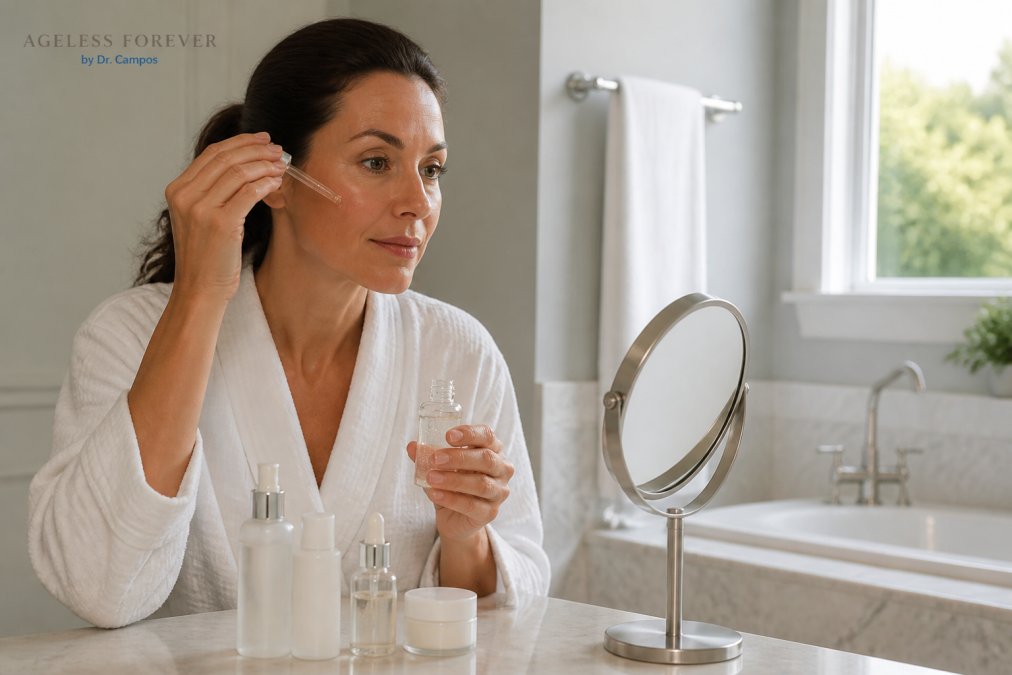
Keep the order the same every day. Consistency matters more than the number of products you own.
Morning: Cleanse, Treat, Protect
Your morning routine is about defense. You're protecting skin from UV, pollution, and free radicals all day.
- Cleanse with a gentle, vitamin-rich cleanser that won't strip moisture
- Mist with an antioxidant spray to prep skin and add a layer of protection
- Treat with a serum that targets tone, pores, or firmness
- Moisturize to lock in hydration and support the barrier
- Protect with a mineral SPF 50, every single day
The Morning Set bundles all five steps plus the SolarGuard™ Supplement for internal UV defense.
Evening: Repair and Replenish
Night is when skin repairs itself. Your evening routine should support that process, not fight it.
- Cleanse to remove sunscreen, oil, and buildup
- Mist to calm and prep skin
- Treat with a renewal serum that boosts cell turnover
- Moisturize with a richer night cream
- Support sleep with a supplement that aids overnight recovery
The Night Set pairs the Renew + Glow Serum with the NightSkin™ Supplement to support overnight repair while you sleep.

| Time | Step | Product Type | Purpose |
|---|---|---|---|
| Morning | Cleanse | Gentle cleanser | Remove buildup without stripping |
| Morning | Treat | Antioxidant serum | Brighten and protect |
| Morning | Protect | Mineral SPF 50 | Block UV damage |
| Evening | Cleanse | Barrier cleanser | Prep skin for repair |
| Evening | Treat | Renewal serum | Boost cell turnover |
| Evening | Moisturize | Night cream | Lock in hydration |
How to Layer Medical Skincare Products Without Irritation
The rule for how to layer medical skincare products is simple: thinnest to thickest, and one active at a time when you're starting out.
Layering mistakes cause most of the irritation people blame on "sensitive skin." The products aren't the problem. The order and the pace are.
Follow these rules:
- Apply water-based formulas before oil-based ones
- Wait 60 seconds between each layer so products absorb
- Don't stack two strong acids in the same routine
- Introduce one new active every two weeks, not all at once
- If skin stings, cut back to every other night
The Best Skincare Routine for Humid Climates
The best skincare routine for humid climates swaps heavy creams for lightweight, water-based layers. Humidity traps moisture, so you need less occlusive product, not more.
If you live somewhere muggy, adjust like this:
- Use a gel or lightweight serum instead of a thick cream
- Keep the antioxidant mist, since it hydrates without weight
- Choose a mineral SPF that won't slide off in heat
- Skip heavy night creams in summer and use a lighter moisturizer
- Cleanse twice if you sweat heavily during the day
The Skin Biolipids Replenishing Crème is lightweight but nourishing, which makes it a good fit for humid weather.
Maintaining Skin Health After Professional Treatments
Maintaining skin health after professional treatments means supporting the barrier while it recovers. Your at-home routine decides how long your in-office results last.
A simple post-treatment approach:
- Pause strong actives for a few days and focus on gentle cleansing
- Use barrier-supporting moisturizers with ceramides
- Keep sun protection strict, since skin is more vulnerable to UV
- Reintroduce actives slowly, one at a time
- Stay consistent, since results fade fastest when routines stop
Common Mistakes to Avoid With Medical-Grade Products
The biggest offenders:
- Using too much product. A pea-sized amount of serum is enough.
- Skipping SPF. Actives make skin more sun-sensitive, so UV undoes your progress.
- Mixing too many actives at once. This causes irritation, not faster results.
- Quitting after two weeks. Visible change takes 8 to 12 weeks.
- Ignoring your barrier. If skin feels tight or stings, scale back.
- Buying random products. A set built to work together beats mismatched items.
If you want a routine that's already built to work together, the Antiaging Essentials Set covers all seven steps, from a 10% glycolic acid cleanser to the NAD+ Matrix™ Supplement for internal support. Every product is designed to pair with the next, which removes the guesswork that causes most layering mistakes.
Frequently Asked Questions
What is the difference between medical-grade and over-the-counter skincare?
Medical-grade formulas carry higher concentrations of active ingredients like glycolic acid, niacinamide, and peptides than drugstore products, and they are formulated to penetrate deeper into the skin. The Antiaging Essentials Set, for example, includes a cleanser with 10% glycolic acid, a concentration you rarely find on standard retail shelves. This means faster visible changes in tone, texture, and firmness, but it also means you should introduce these products gradually and follow directions carefully.
How often should I use medical-grade skincare products?
Most medical products are designed for daily use, but frequency depends on the active ingredients. A gentle cleanser, antioxidant mist, and moisturizer can be used twice daily. Exfoliating or renewing products, such as the Renew + Glow Serum in the Night Set, are typically used once daily in the evening. If your skin is sensitive, start with every other day and increase as your skin adjusts over two to three weeks.
How long does it take to see results from medical-grade skincare?
Hydration and brightness often improve within one to two weeks. Fine lines, firmness, and tone changes usually take six to twelve weeks of consistent use, since they depend on cell turnover and collagen support. The NAD+ Matrix Supplement in the Antiaging Essentials Set works from the inside out, so give the full routine at least three months before judging results. Take a photo in the same lighting each month to track progress objectively.
Can medical-grade skincare help with sun damage in Florida?
Yes. Daily broad-spectrum SPF is the foundation, and the Morning Set includes a tinted mineral SPF 50 with 14.5% zinc oxide plus the SolarGuard Supplement for internal photoprotection. Pair that with the Brightening Pore Reducing Collagen Booster Serum, which uses niacinamide and licorice root to help even out pigmentation. Consistent sun protection is what allows the brightening ingredients to actually make a difference in a high-UV climate.