



Table of Contents
- Signs of Damaged Skin Barrier: What to Look For
- What Causes Skin Barrier Irritation (and How to Stop It)
- How to Fix Skin Barrier Irritation: Step-by-Step Recovery Plan
- Best Ingredients for Skin Barrier Repair
- Skin Barrier Repair Timeline: What to Expect Week by Week
- Purging vs. Barrier Damage: How to Tell the Difference
- Lifestyle Triggers That Slow Barrier Recovery
- Conclusion: Building a Barrier That Bounces Back
- Frequently Asked Questions
Last Updated: September 11, 2026
Signs of Damaged Skin Barrier: What to Look For
Skin barrier irritation shows up as redness, stinging, tightness, and flaking that don't improve with your usual routine. The signs are easy to misread as "sensitivity" when the real issue is a compromised moisture barrier.
Watch for these signals:
- Stinging or burning when you apply products that never bothered you before
- Redness that lingers after cleansing, sometimes for hours
- Flaking and rough patches despite regular moisturizing
- Tightness that persists even after you've applied cream
- Hypersensitivity to water temperature, fragrance, or anything with active ingredients
One sign alone may mean nothing. Three or more together, especially after a product change, points to barrier damage. The stratum corneum, your skin's outermost layer, has lost the lipids it needs to hold water in and irritants out (peer-reviewed research).
What Causes Skin Barrier Irritation (and How to Stop It)
Over-exfoliation is the most common cause, and it's almost always self-inflicted. Acids, scrubs, and retinoids used too often strip the ceramides, fatty acids, and cholesterol that form your lipid barrier (PubMed). Once those lipids thin out, transepidermal water loss climbs and irritants slip through.
Other frequent triggers:
- Retinoid overuse without a gradual build-up period
- Harsh cleansers that leave skin squeaky-clean, a sign your pH balance has shifted
- Layering too many actives in one routine
- Environmental stress like cold air, wind, or dry indoor heating
- Underlying conditions such as rosacea that make the barrier more fragile
Stopping the damage means removing the cause first. No moisturizer repairs a barrier while you're still stripping it every night.
How to Fix Skin Barrier Irritation: Step-by-Step Recovery Plan
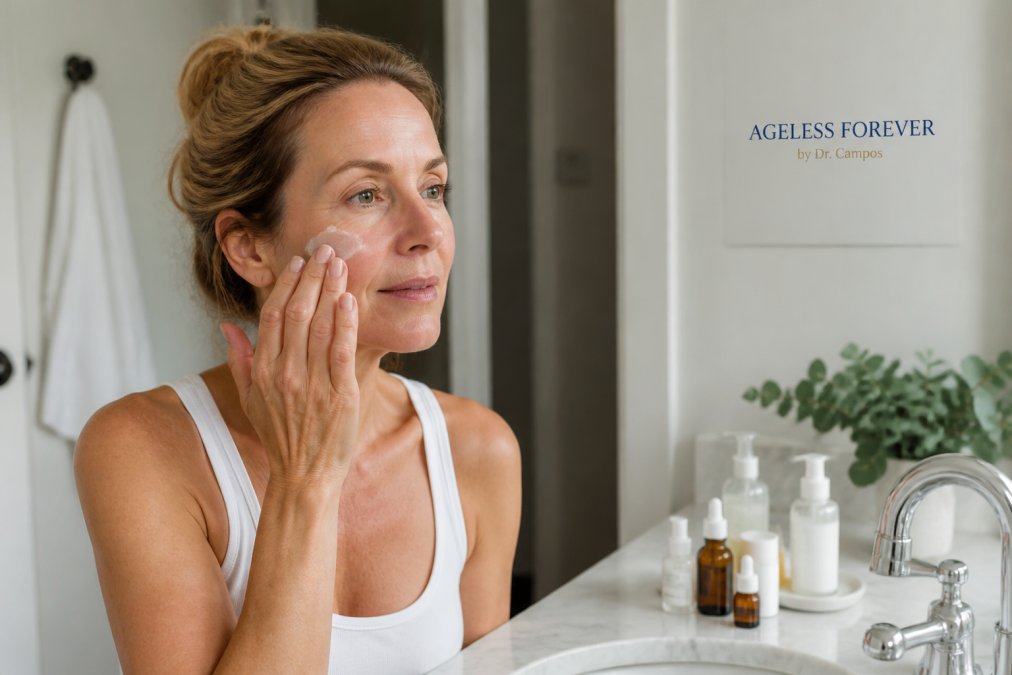
Fixing skin barrier irritation takes roughly two to four weeks of stripping your routine back to basics. The plan below works because it removes every irritant, then rebuilds the lipid barrier from the outside in. What most guides skip is that you can do this at almost any budget, the active ingredients that repair a barrier are inexpensive, and a three-product routine can be highly effective during recovery.
Step 1: Stop All Actives and Exfoliants
Pull every acid, retinoid, scrub, and vitamin C serum from your routine today. This is non-negotiable. Your barrier cannot rebuild while actives keep dismantling it. Expect a few days where skin looks duller. That's normal, and it passes.
A common pattern is that people quit one active but keep another, say, they drop the retinol but keep a daily salicylic acid toner. Read every label. Anything with glycolic acid, lactic acid, salicylic acid, mandelic acid, retinol, retinal, ascorbic acid, or benzoyl peroxide comes out of rotation for the full recovery window.
Step 2: Switch to a Gentle Cleanser and Lukewarm Water
Hot water strips lipids faster than anything else in your routine. Use lukewarm water and a soap-free, fragrance-free cleanser once at night, rinsing with water alone in the morning.
How to judge a cleanser: look for a short ingredient list, no fragrance or essential oils, and a pH that sits near skin's natural range (most dermatologists point to roughly 4.5 to 5.5). If a cleanser leaves skin tight, squeaky, or stinging, it is the wrong one regardless of what the front of the bottle claims.
Step 3: Apply the Soak-and-Seal Technique
This is the single most effective repair step. After cleansing, apply a humectant to damp skin, then immediately seal it with an occlusive moisturizer. The humectant pulls water in; the occlusive locks it there. Skipping the seal is why many people moisturize diligently and still flake.
Step 4: Protect With Sunscreen Every Morning
A compromised barrier is far more vulnerable to UV damage. Apply a mineral sunscreen every morning, even indoors near windows. Sunscreen protection isn't optional during repair; it prevents the inflammation from restarting daily.
Budget-Friendly vs. Luxury: What Actually Matters
This is where most guides lose people. The ingredients that repair a barrier, ceramides, glycerin, petrolatum, dimethicone, niacinamide, panthenol, are commodity ingredients.
What you are paying extra for at the high end is texture, packaging, and additional soothing botanicals, not a fundamentally faster repair. A minimalist three-product routine (gentle cleanser, humectant-plus-occlusive moisturizer, mineral sunscreen) can be highly effective. You do not necessarily need a dedicated serum, essence, ampoule, or mask to recover.

Where it makes sense to spend more: if your skin is reactive to common preservatives or you need a specific texture to actually use the product consistently. Consistency beats formulation prestige every time during recovery.
Best Ingredients for Skin Barrier Repair
The best ingredients for skin barrier repair are ceramides, fatty acids, and cholesterol, ideally in a ratio close to what skin naturally produces. These three lipids make up the mortar between your skin cells. When they're replenished topically, transepidermal water loss drops and redness calms.
Look for these in your products:
- Ceramides to rebuild the lipid barrier
- Hyaluronic acid and glycerin as humectants that draw in skin hydration
- Squalane and shea butter as occlusives that seal moisture in
- Niacinamide to support the microbiome and reduce redness
- Panthenol and green tea to calm inflammation
Avoid fragrance, essential oils, alcohol, and physical scrubs until skin settles. A concentrated antioxidant and barrier repair serum, such as the Ageless Forever by Dr. Campos Concentrated Antioxidant + Barrier Repair Serum, pairs well with a ceramide cream here, since the serum delivers soothing actives while the cream seals them in.

Skin Barrier Repair Timeline: What to Expect Week by Week
Most people see meaningful improvement within two to four weeks if they remove all irritants on day one. The skin barrier repair timeline depends heavily on how much damage you started with and how strictly you follow the plan.
| Week | What You'll Notice | What to Do |
|---|---|---|
| Week 1 | Stinging fades, redness still present | Cleanser, moisturizer, sunscreen only |
| Week 2 | Flaking reduces, tightness eases | Keep routine identical, no additions |
| Week 3 | Redness calms, skin feels resilient | Reintroduce one gentle product |
| Week 4 | Barrier largely restored | Add actives back slowly, one at a time |
The mistake people make is adding products back too early because skin looks better. Improvement at week two is fragile. Wait until week four before reintroducing anything with an active ingredient, and add only one product per week so you can isolate reactions.
Purging vs. Barrier Damage: How to Tell the Difference
Purging and barrier damage look similar but need opposite responses. Purging is a temporary breakout from a new active speeding up cell turnover, and it clears on its own. Barrier damage is irritation from overuse, and it worsens if you keep going.
Here's how to separate them:
- Purging appears where you normally break out, fades within a few weeks, and comes with no stinging or redness.
- Barrier damage brings stinging, burning, and redness alongside breakouts, and can appear anywhere on the face.
If your skin stings when you apply the product, stop. That's barrier damage, not purging. Pushing through is the fastest way to make a bad situation worse.
Lifestyle Triggers That Slow Barrier Recovery
Skincare alone won't fix a barrier if your daily habits keep provoking inflammation. A growing body of dermatology research on the skin barrier links barrier function to sleep, stress, and diet, and these factors are routinely ignored in clinical-heavy guides.
The triggers worth addressing:
- Chronic stress, which raises cortisol and slows repair
- Poor sleep, when most barrier recovery happens
- High-sugar and high-alcohol intake, both linked to inflammation
- Extreme temperatures, from hot showers to cold outdoor air
- Skipping healthy fats, since your barrier is built from lipids
You don't need a total lifestyle overhaul. Prioritize sleep and cut back on alcohol for two weeks. Most people notice their skin calms faster once these are addressed.
The Part Nobody Talks About: The Frustration Cycle
Chronic barrier irritation is exhausting in a way that doesn't show up in photos. Skin that stings, flakes, and reacts to products it used to tolerate wears people down. And that mental fatigue is itself a barrier-repair problem, because it drives the exact behaviors that prolong damage.
The pattern looks like this: skin gets irritated, you panic, you buy three new "soothing" products, one of them contains a hidden active or fragrance, skin gets worse, you panic harder, and the cycle restarts. Anxiety about your skin is a trigger, not just a symptom.
Breaking the cycle takes two moves:
- Commit to a fixed routine for 14 days and stop shopping. No new products, no reading ingredient lists at midnight, no comparing your skin to anyone else's. The routine is done. Let it work.
- Track one variable, not ten. Note stinging on a 1-to-5 scale each morning. That single number tells you whether you're trending better or worse, and it stops you from overreacting to a bad photo or a bad mirror day.
If barrier irritation is feeding persistent anxiety, low mood, or social withdrawal, that is worth raising with a healthcare provider. Skin and mental health are not separate systems, and treating one often helps the other.
Conclusion: Building a Barrier That Bounces Back
Recovering from skin barrier irritation is less about adding products and more about removing the wrong ones. Strip your routine to a gentle cleanser, a barrier-repair moisturizer, and sunscreen, then give it four full weeks before adding anything back. At Ageless Forever by Dr. Campos, our medical-grade formulas are built to support this kind of recovery, including a soap-free, lipid-rich cleanser like the Calming Barrier Restoration Cleanser and a concentrated antioxidant and barrier repair serum like the Skin Barrier Repair Duo designed to calm inflammation and replenish hydration. Every formula is developed by Dr. Daniel Campos, DNP, to complement professional treatments and maintain results at home. Get started with Ageless Forever by Dr. Campos and give your skin the calm, resilient foundation it needs to bounce back.

Frequently Asked Questions
How long does it take to repair a damaged skin barrier?
Most people see noticeable improvement in 2 to 4 weeks with consistent gentle care. Redness, stinging, and flaking typically ease within the first week once you stop actives and exfoliants. Full barrier recovery, where your skin tolerates normal products again, usually takes 4 to 6 weeks. If irritation persists beyond 8 weeks despite a stripped-back routine, see a dermatologist to rule out an underlying condition like rosacea or eczema.
Which ingredients should I avoid when my skin barrier is irritated?
Pause retinoids, AHAs, BHAs, vitamin C serums, and any physical scrubs until your skin stops stinging. Skip alcohol-based toners, fragrance, essential oils, and high-concentration niacinamide if it triggers flushing. Over-exfoliation is the most common cause of barrier damage, so give your skin a break from anything that tingles, burns, or peels. Stick to fragrance-free, hypoallergenic formulas while you recover.
Can medical-grade skincare help soothe an irritated skin barrier?
Yes, when the formulas are designed for compromised skin. Medical-grade products often use higher concentrations of ceramides, fatty acids, cholesterol, and anti-inflammatory botanicals than drugstore options. A targeted set like the Sensitive & Barrier Repair Set ($264.95) combines a non-stripping cleanser, barrier serum, and lipid-replenishing moisturizer to calm redness and rebuild the moisture barrier. Look for fragrance-free, non-comedogenic formulas and introduce one product at a time.
How do I tell if my skin is purging or if my barrier is damaged?
Purging brings small bumps and whiteheads in the same areas where you normally break out, and it clears in 4 to 6 weeks. Barrier damage looks different: redness, stinging, burning, flaking, and tightness across the whole face, often within days of starting a new active. If your skin hurts when you apply water or gentle moisturizer, that points to barrier damage, not purging. Stop the active and focus on repair.