



Table of Contents
- What Medical Grade Anti Aging Cream Actually Means
- Comparison Table: Medical Grade Anti Aging Creams Reviewed
- Top Medical Grade Anti Aging Creams for Fine Lines and Wrinkles
- How to Treat Deep Facial Lines with Medical Grade Formulas
- Medical Grade Retinol vs Over the Counter: What the Concentration Data Shows
- How to Build a Medical Grade Skincare Routine That Works
- Skin Type Compatibility: Matching Active Ingredients to Your Skin
- Is Medical Grade Skincare Worth the Investment?
- Frequently Asked Questions
Last Updated: September 14, 2026
What Medical Grade Anti Aging Cream Actually Means
Medical grade anti aging cream is shorthand for skincare with higher active concentrations than mass-market products, often sold through dermatology or aesthetic practices rather than drugstores. The term carries no legal definition, which is why it causes so much confusion.
This guide from Ageless Forever by Dr. Campos breaks down what separates a clinical-strength formula from a standard moisturizer, which ingredients drive visible change, and how to choose based on your skin rather than the label.
Regulatory Definition vs. Marketing Term
The FDA regulates cosmetics and drugs under separate frameworks, and "medical grade" appears in neither (the FDA). A product is legally a drug only if it claims to alter skin structure or function, which is why retinol sits in a gray zone while true retinoid treatments require a prescription (the FDA).
In practice, "medical grade" signals three things: higher active concentrations, better formulation stability, and distribution through clinical channels. It does not guarantee results or mean the product is safer than everything at a beauty counter.
Comparison Table: Medical Grade Anti Aging Creams Reviewed
| Product | Price | Key Actives | Best For |
|---|---|---|---|
| Advanced Brightening Anti-Aging Crème | $74.95 | Ceramides, hyaluronic acid, resveratrol, peptides | Dry, mature skin needing hydration and radiance |
| Crème Replénissante Lift & Volume Restore | $79.95 | Volume-Filling Technology | Loss of firmness and facial volume |
| RENAURÉ™ Copper Peptide Cell Renewal Crème | $89.95 | 1% GHK-Cu copper tripeptide, caffeine, ceramides | Barrier repair and oxidative damage |
| Retinoin PM Treatment Serum 5X | $94.95 | Retinoid complex | Fine lines, uneven tone, enlarged pores |
| Skin Biolipids Replenishing Crème | $74.95 | Ceramides, niacinamide, sodium hyaluronate | Barrier repair across all skin types |
| Glycolic + Peptide Renewal Crème | $49.95 | 15% glycolic acid, firming peptides | Texture, dullness, uneven pigmentation |
Top Medical Grade Anti Aging Creams for Fine Lines and Wrinkles
The best medical grade anti aging cream depends less on price than on which active your skin actually needs. Below are formulas matched to the concern each addresses.

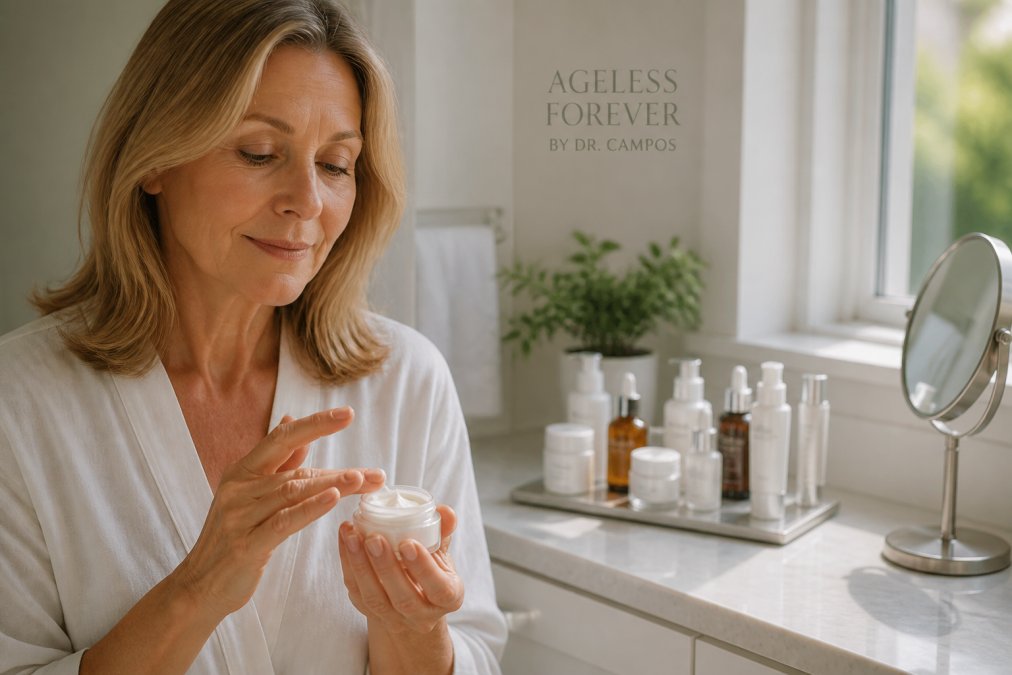
Advanced Brightening Anti-Aging Crème ($74.95)
The best starting point for dehydrated, mature skin that has lost its glow. Ceramides and hyaluronic acid restore moisture, while resveratrol and botanical antioxidants defend against the daily oxidative load that accelerates fine lines. It is a hydration and antioxidant formula, not a resurfacing one, so it will not flatten deep lines on its own.
Crème Replénissante Lift & Volume Restore ($79.95)
Volume loss, not just surface wrinkling, drives the sagging look in the mid-face and jawline. This cream targets that with a proprietary Volume-Filling Technology that delivers a plumping effect. Expect visible improvement in elasticity and contour, not a structural change.
RENAURÉ™ Copper Peptide Cell Renewal Crème ($89.95)
Copper peptides support collagen production and barrier repair at once. This formula pairs 1% GHK-Cu with green tea polyphenols, caffeine, ceramides, and hyaluronic acid. It suits reactive, post-procedure, or environmentally worn skin, but results build over months, not weeks.
Retinoin PM Treatment Serum 5X ($94.95)
If fine lines, uneven tone, and enlarged pores are your primary complaints, this is the most direct route. It is a nighttime treatment built for overnight cellular turnover, addressing discoloration and texture alongside wrinkles. Introduce it slowly, two nights a week at first, because retinoids demand a tolerance-building period.
Skin Biolipids Replenishing Crème ($74.95)
Barrier repair is the unglamorous foundation every anti-aging routine needs. This daily moisturizer combines ceramides, niacinamide, sodium hyaluronate, and antioxidant botanicals including green tea and resveratrol to rebalance moisture and calm sensitivity. It works for all skin types, including the oily and combination skin often overlooked in anti-aging recommendations.
Glycolic + Peptide Renewal Crème ($49.95)
At the lowest price point here, this 15% pure glycolic acid cream handles exfoliation and firming in one step. The low-pH alpha hydroxy acid lifts dead, dull, stained cells while firming peptides and humectants support collagen and moisture. It suits uneven texture and hyperpigmentation. Build up frequency gradually and always follow with broad-spectrum SPF.
How to Treat Deep Facial Lines with Medical Grade Formulas
Deep facial lines respond to a different strategy than fine surface wrinkles: actives that reach the dermis and support collagen production over time, not just surface hydration.
The approach that works combines three things: a retinoid to drive cellular turnover, a peptide or growth-factor formula to support collagen and elasticity, and consistent barrier repair so the actives do not compromise your skin. Apply thinner, water-based formulas first, then richer creams, and give each active a few weeks before adding another.
Medical Grade Retinol vs Over the Counter: What the Concentration Data Shows
The real difference between medical grade retinol vs over the counter comes down to three variables: active concentration, delivery format, and formulation stability. Over-the-counter retinol typically sits at lower concentrations and must convert to retinoic acid through a two-step enzymatic process, meaning a slower, gentler effect and less active reaching the receptor. Professional formulas often use higher concentrations or more stable delivery systems, so more active arrives intact.
Label percentages are not measured the same way across categories, which is why a side-by-side number comparison is harder than it looks.
Why the Percentage on the Label Is Not the Whole Story
Retinol, retinaldehyde, and retinyl palmitate are all vitamin A derivatives, but they sit at different points on the conversion chain. Retinyl palmitate is weakest and requires the most conversion steps; retinol is stronger; retinaldehyde is one step from retinoic acid; prescription tretinoin is already retinoic acid. A 1% retinol product and a 1% retinaldehyde product are not equivalent, even though the numbers match.
A well-formulated 0.3% retinol used consistently can outperform a poorly stabilized 1% retinol that degrades in the jar. Retinol oxidizes on exposure to light and air, so opaque, airless pumps preserve potency in a way open jars do not (pubmed.ncbi.nlm.nih.gov).
What the Numbers Actually Look Like
| Category | Typical Active Range | Conversion Required | Irritation Risk |
|---|---|---|---|
| Drugstore retinol | Lower concentrations, often buffered with emollients | Two-step conversion to retinoic acid | Lower, but results build slowly |
| Professional retinol | Higher concentrations, often encapsulated or time-released | Same conversion, but more active delivered intact | Moderate; tolerance-building needed |
| Retinaldehyde | One step from retinoic acid | Single conversion step | Moderate to high |
| Prescription tretinoin | Already retinoic acid | None | Highest; dermatologist supervision typical |
Encapsulation explains most of the gap. Encapsulated retinol releases gradually over several hours, lowering peak irritation while still delivering the active, which is why two products with the same stated percentage can behave very differently on the same skin.
The Practical Rule
Start with the gentlest retinoid you can use four nights a week, and only increase concentration once your skin has adapted. Higher concentration means higher irritation risk, especially for sensitive or compromised skin. A well-formulated lower-concentration retinoid used consistently will outperform a harsh one you cannot tolerate.
When comparing a professional retinol to a drugstore option, ask two questions: what percentage of active is in the formula, and is it encapsulated or time-released? A label claim without both answers tells you very little.
How to Build a Medical Grade Skincare Routine That Works
A routine built around too many actives is a common mistake. More products do not equal faster results, and stacking a retinoid, an acid, and a vitamin C serum in the same hour can damage the barrier.
The structure that works is simple: antioxidant protection and sun defense in the morning, cellular turnover and barrier repair at night. Everything else supports those two jobs.
Morning Routine: Antioxidant Protection and Broad-Spectrum SPF
Start with a gentle cleanse, then apply a vitamin C serum or antioxidant formula to defend against daytime oxidative stress. Follow with a hydrating cream, and finish with broad-spectrum SPF every day. Sun protection is not optional when using actives, because UV exposure undoes the collagen support you are working to build.
Evening Routine: Cellular Turnover and Barrier Repair
Cleanse, then apply your retinoid or exfoliating treatment on dry skin. Wait a few minutes, then layer a barrier-repair moisturizer on top to reduce irritation. On nights you skip the retinoid, use a peptide or copper peptide cream instead, letting your skin recover while still making progress.

Skin Type Compatibility: Matching Active Ingredients to Your Skin
Most buying guides are product catalogs. This section is the opposite: a compatibility map showing which clinical actives suit your skin type and which will likely cause irritation, so you can read any ingredient list and decide for yourself.
Matching actives to skin type prevents most of the irritation that makes people quit a routine in week three. The chart below is the fastest way to check whether a formula fits before you buy.
Ingredient Compatibility by Skin Type
| Active Ingredient | Dry / Mature Skin | Oily / Combination Skin | Sensitive / Reactive Skin |
|---|---|---|---|
| Retinol / retinoid | Well tolerated; pair with a rich barrier cream | Effective for pores and texture; use a lightweight base | Introduce slowly at low concentration; buffer with moisturizer |
| Glycolic acid (AHA) | Helps dullness; follow with heavy hydration | Excellent for texture and oil control | Often too irritating; consider lactic acid instead |
| Salicylic acid (BHA) | Use sparingly; can feel drying | Best fit for congested, oily skin | Generally better tolerated than glycolic at low percentages |
| Vitamin C | Brightening and antioxidant support | Lightweight serums work well | Use a gentler derivative if L-ascorbic acid stings |
| Niacinamide | Supports barrier and hydration | Helps regulate oil and refine pores | One of the best-tolerated actives across types |
| Hyaluronic acid | Core hydrator for mature skin | Lightweight, non-greasy hydration | Very well tolerated; rarely causes reactions |
| Ceramides | Essential for barrier repair | Useful in gel-cream formats | Ideal starting point for compromised skin |
| Copper peptides | Support firmness and repair | Lightweight and non-comedogenic | Gentle enough for post-procedure and reactive skin |
| Azelaic acid | Helps uneven tone | Good for acne-prone and redness | Among the gentlest options for sensitive skin |
How to Read the Chart for Your Situation
Dry and mature skin tolerates richer creams and retinoids well but needs more barrier support, so ceramides and hyaluronic acid should be non-negotiable. Oily and combination skin does better with lightweight formulas and can handle glycolic acid more readily, but should still avoid layering multiple exfoliating acids in one week. Sensitive or post-procedure skin should start with barrier repair and copper peptides before any exfoliating acid, and treat retinoids as a later addition.
A useful rule of thumb: if your skin stings, burns, or flakes for more than a few days after starting a new active, you started too high or layered too many actives at once. Back off to a single active, rebuild tolerance, then reintroduce the second.
Combination Skin Is the Most Common and the Most Mishandled
Most people are not purely dry or purely oily. The T-zone is oilier while the cheeks are drier, so a single all-over product rarely fits. Treat zones separately: a lightweight gel or serum with niacinamide through the T-zone, and a richer ceramide cream on the cheeks. This beats buying two full routines.
If you are unsure where you fall, advanced skin analysis available at Ageless Skin Bar removes the guesswork and prevents you from buying products your skin cannot tolerate. Knowing your skin type before you shop is a significant factor in whether a clinical-strength formula helps or hurts.
Is Medical Grade Skincare Worth the Investment?
For most people treating visible signs of aging, yes, with one condition: you have to use it consistently. Higher concentrations and stable formulations mean each application does more work, which justifies the price difference over mass-market products.
What you are paying for is not a label. It is the active concentration, the formulation stability that keeps those actives potent, and the clinical thinking behind how the ingredients work together. That said, no cream replaces professional guidance. Buying online without knowing your skin type is how people end up with a cabinet full of products that do not fit.
Ageless Forever by Dr. Campos formulates its line to bridge that gap, with a range built to complement in-office treatments and maintain results at home. The Retinoin PM Treatment Serum 5X handles overnight renewal, the RENAURÉ™ Copper Peptide Cell Renewal Crème supports barrier repair and firmness, and the Skin Biolipids Replenishing Crème keeps the barrier intact so the actives can do their job. Every formula comes with a money-back guarantee.

The hardest part of buying medical grade anti aging cream online is knowing which formula fits your skin before you spend the money. Ageless Forever by Dr. Campos removes that guesswork with a science-driven line developed by Dr. Daniel Campos, DNP, and personalized skin analysis at Ageless Skin Bar. Start with the Retinoin PM Treatment Serum 5X for overnight renewal, add the RENAURÉ™ Copper Peptide Cell Renewal Crème for firmness and barrier support, and protect your results with broad-spectrum SPF every morning. Get started with Ageless Forever by Dr. Campos and subscribe to save on the routine your skin will actually stick with.
Frequently Asked Questions
What is the difference between medical-grade and drugstore anti-aging cream?
Drugstore creams are limited in how much of certain active ingredients they can include because they are sold as cosmetics, not as products with higher concentrations of ingredients like retinol or glycolic acid. Medical-grade formulas often contain higher percentages of active ingredients, are pH-balanced for better absorption, and undergo dermatological testing for formulation stability. The practical difference is that medical-grade products are designed to produce visible changes in skin texture, fine lines, and hyperpigmentation, while drugstore options primarily moisturize and temporarily smooth the surface.
What ingredients should I look for in a medical grade anti aging cream?
Prioritize formulas with retinoids for cellular turnover and collagen production, vitamin C serum for antioxidant protection and radiance, hyaluronic acid for hydration, and peptide complexes for skin elasticity. Broad-spectrum SPF is essential in any morning routine. For barrier repair, look for ceramides and niacinamide. For hyperpigmentation, glycolic acid and vitamin C are effective. The concentration matters as much as the ingredient name, so check whether the product lists percentages or uses terms like clinical-strength to indicate meaningful active levels.
How long before I see results from a medical grade anti-aging cream?
Hydration and radiance improvements typically appear within one to two weeks. Fine lines and skin texture changes usually require four to eight weeks of consistent use, because cellular turnover and collagen production operate on a slower cycle. Deep facial lines and hyperpigmentation may take twelve weeks or longer. Results depend on ingredient concentration, how consistently you apply the product, and whether you protect your skin with broad-spectrum SPF during the day. Photographic documentation every four weeks helps track subtle changes.
Can I use medical grade retinol with other active ingredients?
Yes, but timing and pairing matter. Retinoids work best at night. Avoid layering them with glycolic acid or other exfoliating acids in the same application, as this increases irritation risk. Use vitamin C serum and antioxidant protection in the morning, then retinoids and barrier repair creams at night. If your skin is sensitive, start with two to three nights per week and build tolerance. A pH-balanced moisturizer with ceramides applied after your retinol helps reduce flaking and supports the moisture barrier.
Is medical-grade skincare worth the investment compared to over-the-counter options?
The cost difference reflects higher active ingredient concentrations, formulation stability testing, and the use of delivery systems that improve penetration depth. If your primary concern is fine lines, loss of firmness, or hyperpigmentation that over-the-counter products have not addressed, a medical-grade formula is more likely to produce measurable changes in skin texture and elasticity. For basic hydration and maintenance, a well-formulated over-the-counter moisturizer can be sufficient. The investment makes the most sense when you have specific anti-aging goals.