



Table of Contents
- Medical Grade vs Cosmetic Skincare: What Sets Them Apart
- Medical-Grade Skincare vs Over-the-Counter: Where the Real Gap Is
- Medical-Grade Skincare Ingredients That Do the Heavy Lifting
- How to Choose Skincare Products for Your Skin Type
- How Long Does Skincare Take to Work? Setting Real Timelines
- Where Medical-Grade Routines Fit After In-Office Treatments
- Conclusion: Choosing the Right Level of Care for Your Skin
- Frequently Asked Questions
Last Updated: October 7, 2026
Medical Grade vs Cosmetic Skincare: What Sets Them Apart
Medical grade skincare refers to products formulated with higher concentrations of active ingredients and sold through licensed professionals, while cosmetic skincare is available in retail stores with lower active concentrations. This guide from Ageless Forever by Dr. Campos breaks down exactly what separates the two categories.
The distinction matters because the labels confuse people constantly. A jar at the drugstore and a jar at a clinician's office may both say "anti-aging," but they are built to different standards. The FDA guidance on cosmetics versus drugs draws a clear line: products that alter skin structure are regulated differently than those that simply beautify.
Here is what most guides get wrong: the difference is not just strength. It is also who supervises the formula, what testing backs it, and who guides its use.
Below, we explain how each category works so you can decide which level of care your skin actually needs.
Medical-Grade Skincare vs Over-the-Counter: Where the Real Gap Is
The real gap is concentration, delivery, and professional oversight, not marketing language. Over-the-counter products are formulated for the widest possible audience, which means lower active percentages and gentler delivery systems.
Medical-grade formulas can carry higher concentrations of ingredients like retinol, vitamin C, and exfoliating acids because a professional recommends and monitors their use. That supervision is the point. A product strong enough to change skin behavior is also strong enough to cause irritation if misused.
Regulation reinforces this split. The FDA's page on cosmetic labeling and claims explains that cosmetics cannot claim to alter skin structure, while drug-like claims require a different regulatory path. Medical-grade lines sit in that more clinical space.
| Factor | Cosmetic Skincare | Medical-Grade Skincare |
|---|---|---|
| Active concentration | Lower, mass-market levels | Higher, clinical levels |
| Where sold | Retail and drugstores | Through licensed professionals |
| Oversight | Self-directed | Professional-guided |
| Primary goal | Beautify and moisturize | Change skin function |
| Best for | General maintenance | Targeted correction |
Medical-Grade Skincare Ingredients That Do the Heavy Lifting
Certain ingredients appear far more often, and at higher strengths, in medical-grade formulas. These are the workhorses that separate a clinical routine from a basic one.
- Retinoids: Support cell turnover and soften fine lines over time.
- Vitamin C (tetrahexyldecyl ascorbate): A stable form that brightens and defends against environmental stress.
- Hydroquinone: Used in pigment-correction protocols for stubborn discoloration.
- Hyaluronic acid and squalane: Pull water into skin and reinforce the barrier.
- Glycolic and lactic acids: Exfoliate dead surface cells to smooth and refresh.
Concentration is not the only variable. How an ingredient is delivered, and whether it is paired with barrier-supportive ingredients, determines whether it helps or irritates.
How to Choose Skincare Products for Your Skin Type
Match the formula to your skin's behavior, not to a trend. The right routine for dry, reactive skin looks nothing like the right routine for oily, congestion-prone skin.
Start by identifying your primary concern: fine lines, loss of firmness, uneven tone, or dryness. Then choose actives that target that concern at a strength your skin can handle.
- Dry or sensitive skin: Prioritize barrier ingredients like ceramides, squalane, and hyaluronic acid before adding actives.
- Oily or acne-prone skin: Gentler exfoliating acids and lightweight, non-comedogenic moisturizers work best.
- Hyperpigmentation: Look for vitamin C, hydroquinone, and daily mineral SPF.
- Mature skin: Retinoids plus peptides support firmness and texture.
This is where professional guidance earns its keep. The American Academy of Dermatology's skin care guidance notes that a personalized routine outperforms a generic one, because skin type and history drive what works.
Advanced Recovery Post Care Kit →
How Long Does Skincare Take to Work? Setting Real Timelines
Most people quit too early. Real change takes weeks, and the timeline depends on the ingredient and the concern.
- Hydration and barrier repair: Noticeable within days to two weeks.
- Brightening and tone: Four to eight weeks of consistent use.
- Fine lines and texture: Eight to twelve weeks, often longer with retinoids.
- Pigment correction: Three to six months, with sun protection throughout.
Consistency beats intensity. A moderate routine followed daily will outperform a harsh routine used sporadically, because skin responds to steady signals over time.
Where Medical-Grade Routines Fit After In-Office Treatments
Professional treatments do the heavy lifting in the clinic; medical-grade skincare protects and extends those results at home. This is the part most people underestimate.
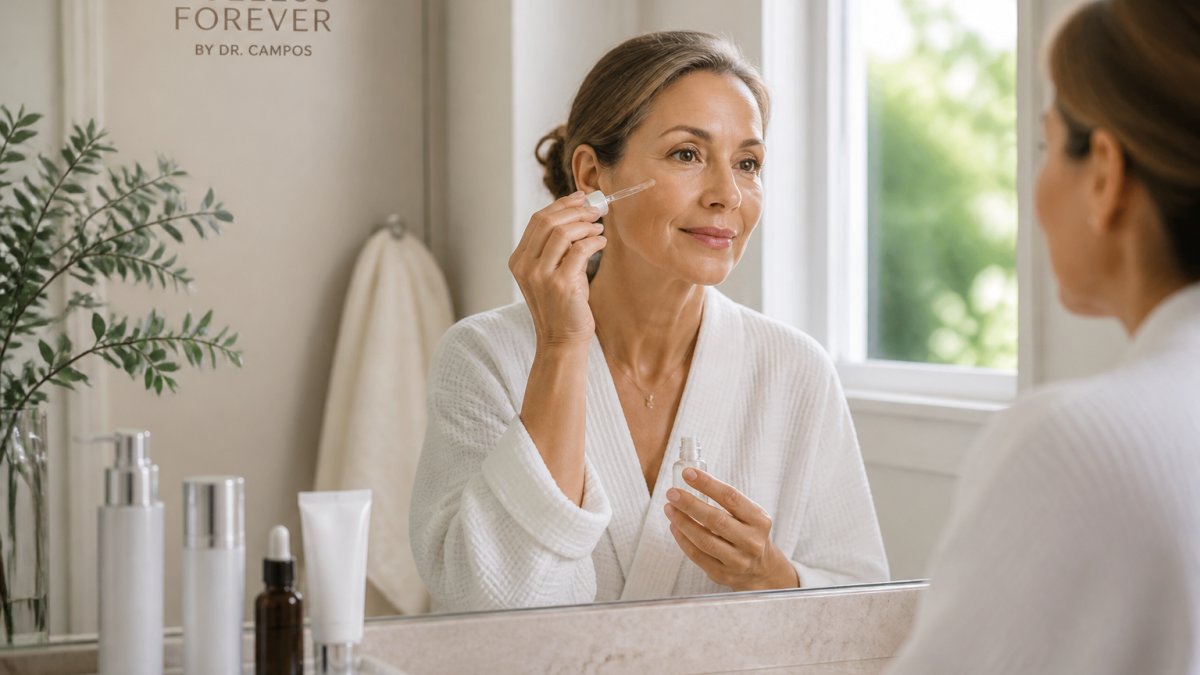
After a professional treatment, skin is often sensitive and needs gentle, barrier-supportive care rather than aggressive actives. A recovery-focused routine should calm inflammation, restore hydration, and shield the barrier while skin heals.
That is exactly the gap our recovery sets are built to fill. The Advanced Recovery Post Care Kit pairs a papaya enzyme cleanser, a hyaluronic acid serum, a silver-fortified recovery ointment, and a mineral SPF 50 to keep post-treatment skin comfortable and protected. For targeted recovery, the Post-Laser Procedures Set and the Post-Chemical Peels Set calm redness and reinforce the barrier during the sensitive window.


For ongoing concerns like hyperpigmentation, the Clinical Brightening Set combines exfoliation, pigment correction, retinoids, and antioxidants with internal UV defense to target stubborn discoloration.

Conclusion: Choosing the Right Level of Care for Your Skin
The difference between medical grade and cosmetic skincare comes down to concentration, oversight, and intent. Cosmetic products maintain; medical-grade formulas, guided by a professional, are built to change skin behavior.
If you have tried over-the-counter products without results, the missing piece is often clinical strength paired with expert guidance. At Ageless Forever by Dr. Campos, every formula is developed by Dr. Daniel Campos, DNP, an internationally recognized expert in aesthetic medicine, and designed to complement in-office treatments and maintain results at home.
Our science-driven line supports deep hydration, cell renewal, and a healthy, radiant complexion, all backed by a money-back guarantee. Get started with Ageless Forever by Dr. Campos and give your skin the level of care it has been asking for.
Frequently Asked Questions
What is the difference between medical-grade and cosmetic skincare?
Cosmetic skincare is sold in mass retail and built for general use, with lower concentrations of active ingredients. Medical-grade skincare is dispensed through licensed providers, uses higher concentrations of ingredients like hydroquinone, retinol, and glycolic acid, and is formulated to support clinical treatment plans. The difference shows up in potency, how the product is sold, and how closely it is matched to a specific skin concern.
Is medical-grade skincare more effective than cosmetic skincare?
Effectiveness depends on whether the formula matches your concern and whether you use it consistently. Medical-grade products often carry higher percentages of proven actives, which can mean faster visible change, but they also demand more careful use. A cosmetic moisturizer may be plenty for basic hydration, while stubborn hyperpigmentation or post-treatment recovery usually calls for the stronger, provider-guided formulas.
Can you buy medical-grade skincare without seeing a provider?
Some medical-grade lines sell directly online, but formulas containing prescription-strength ingredients like hydroquinone are dispensed under provider oversight. If you have not had a skin analysis, start with a consultation or an online skin quiz so the products you pick match your concerns, your sensitivity level, and any in-office treatment you have scheduled.
How long does skincare take to work on fine lines and dark spots?
Hydration and barrier improvement can show within one to two weeks. Fine lines and texture typically need eight to twelve weeks of consistent use, and pigmentation often takes three to six months because it sits deeper in the skin and depends on daily sun protection. Photograph your skin in the same light every few weeks so progress is easier to judge than by memory alone.