



Table of Contents
- What Sun Damage Does to Your Skin
- How We Chose the Best Skincare for Sun Damaged Skin
- 1. Sun Recovery Set: Complete Repair System
- 2. Radiant Glow + 20% Vitamin C Crème: Best Vitamin C Serum for Sun Damage
- 3. Éclat Lumière Vitamin C Brightening Drops: Targeted Dark Spot Corrector
- 4. Daily Essential Mineral Tinted Sun Shield SPF 50: Non-Negotiable Daily Protection
- How to Treat Hyperpigmentation at Home: A Step-by-Step Routine
- Sun Damage Repair Timeline: What to Expect and When
- Frequently Asked Questions
Last Updated: September 9, 2026
What Sun Damage Does to Your Skin
Sun damage is the single largest contributor to visible skin aging, a process known as photoaging that accelerates collagen breakdown and alters cell turnover. UV rays generate free radicals that damage collagen fibers and impair natural repair, producing dark spots, fine lines, wrinkles, and uneven texture over years of exposure (peer-reviewed research).
Skin has remarkable capacity for repair when given the right ingredients. Finding the best skincare for sun damaged skin means looking beyond surface-level claims to formulas that address the underlying biology of photoaging. Ageless Forever by Dr. Campos offers medical-grade skincare targeting the cellular processes that drive sun damage. Below, we break down the products and routines that genuinely work, plus what the repair timeline realistically looks like.
How We Chose the Best Skincare for Sun Damaged Skin
Most guides recommend generic drugstore options or push expensive procedures without explaining the "why." We evaluated products against three criteria: evidence-based active ingredients at effective concentrations, compatibility with sensitive and post-procedure skin, and formulations that support rather than strip the skin barrier.
A common mistake is assuming that aggressive exfoliation alone will fix sun damage. In practice, this often backfires, leaving skin inflamed and more vulnerable to further UV damage. The most effective approach combines antioxidants to neutralize free radicals, retinoids or vitamin C to stimulate cell turnover and collagen production, and broad-spectrum SPF to prevent additional harm. According to guidance from the American Academy of Dermatology on photoaging prevention, consistent daily sun protection is the foundation every other treatment depends on.

1. Sun Recovery Set: Complete Repair System
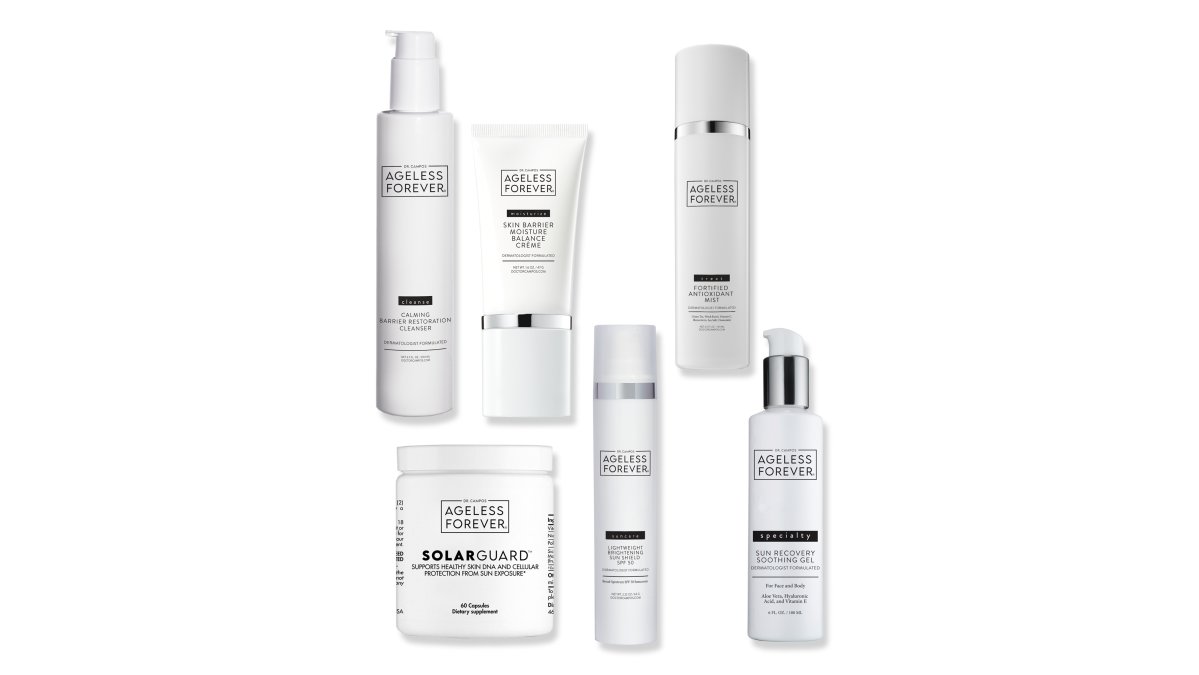
Our top pick for the best skincare for sun damaged skin is the Sun Recovery Set, a complete system that addresses every stage of UV-induced damage. At $189.95, this set bundles six full-size products: a calming cleanser with vitamins A, C, and E, aloe vera, chamomile, and green tea; a fortified antioxidant mist with stabilized vitamin C and green tea; a cooling soothing gel with aloe and hyaluronic acid; a barrier-restoring moisturizer with ceramides and niacinamide; a tinted mineral SPF 50; and the SolarGuard oral supplement.

The included SolarGuard supplement with Polypodium leucotomos supports cellular defense from the inside out.
2. Radiant Glow + 20% Vitamin C Crème: Best Vitamin C Serum for Sun Damage
The Radiant Glow + 20% Vitamin C Crème delivers brightening at $79.95. It uses 20% pure L-ascorbic acid, a form with research backing for stimulating collagen and inhibiting melanin synthesis.
The lightweight cream texture layers well under sunscreen and feels comfortable on stressed skin. For those who find pure vitamin C serums irritating, this moisturizer format delivers the active more gently while providing needed hydration.
3. Éclat Lumière Vitamin C Brightening Drops: Targeted Dark Spot Corrector
For stubborn hyperpigmentation patches, the Éclat Lumière Vitamin C Brightening Drops offer a concentrated approach at $89.95. This serum uses stabilized vitamin C with green tea, avocado, and olive leaf extract to brighten and even tone.
The drops format allows precise application to specific dark spots. With continued use, the formula supports collagen synthesis, addressing both pigment and texture components of sun damage.
4. Daily Essential Mineral Tinted Sun Shield SPF 50: Non-Negotiable Daily Protection
No skincare routine for sun damaged skin works without disciplined sun protection. The Daily Essential Mineral Tinted Sun Shield SPF 50 at $38.95 combines 100% mineral filters with antioxidants and hydrators in a tinted formula.

Mineral sunscreens sit on top of the skin and scatter UV rays rather than being absorbed, making them less likely to irritate sensitive or post-procedure skin. The natural tint helps conceal redness.
How to Treat Hyperpigmentation at Home: A Step-by-Step Routine
Learning how to treat hyperpigmentation at home requires consistency, the right sequence of products, and an understanding of how active ingredients interact. Layering too many strong actives at once triggers irritation and worsens pigmentation through post-inflammatory hyperpigmentation (PIH). The routine below follows "one active per layer, with buffer steps in between."
The Science of Layering Actives Safely
Vitamin C, retinoids, and alpha hydroxy acids (AHAs) all work on pigmentation through different mechanisms: vitamin C inhibits tyrosinase needed for melanin production, retinoids accelerate cell turnover to shed pigmented cells, and AHAs exfoliate the surface. Each can disrupt the skin barrier when used together incorrectly.
Applying a leave-on AHA and a retinoid in the same evening compounds exfoliation and causes irritation. Separate them by 24 to 48 hours, or use an AHA cleanser that rinses off. Vitamin C works best in the morning because it provides antioxidant protection against UV-generated free radicals throughout the day.
Morning Routine for Pigmentation Control
Start with a gentle cleanse using lukewarm water; hot water strips barrier lipids. While skin is slightly damp, apply vitamin C serum or brightening drops to dark spots. Damp skin improves penetration of water-soluble actives, but if you have sensitive skin, wait 60 seconds for skin to dry to reduce absorption intensity.
Follow with a moisturizer containing niacinamide or ceramides to reinforce the barrier. Niacinamide at 2% to 5% reduces melanin transfer to skin cells, complementing vitamin C. Finish with a broad-spectrum mineral SPF 50, applying roughly a quarter teaspoon for the face and neck. Reapply every two hours of cumulative sun exposure.
Evening Routine for Repair and Cell Turnover
In the evening, double cleanse if you wore sunscreen or spent time outdoors: first with an oil-based balm to remove sunscreen and sebum, then with a gentle foaming cleanser to remove residue without stripping.
Apply a hydrating toner or essence with hyaluronic acid. Then, if your skin tolerates it, apply a retinoid, starting with 0.1% to 0.3% retinol twice per week and increasing gradually over four to six weeks. Retinoids increase cell turnover and fade pigmentation but also increase photosensitivity, so they belong in the evening routine only.
On retinoid nights, skip leave-on AHAs and follow with a barrier-repair moisturizer containing ceramides, squalane, or shea butter. If you have sensitive skin, buffer by applying moisturizer first, waiting 10 minutes, then applying the retinoid to minimize irritation while still delivering results.
Adapting the Routine for Your Skin Type
Oily or combination skin: Use a gel-based moisturizer and consider a 2% salicylic acid cleanser two to three times per week. Salicylic acid is oil-soluble and penetrates sebum-filled follicles, preventing breakouts that can lead to PIH.
Dry or mature skin: Prioritize humectants and occlusives. Layer a hyaluronic acid serum under a cream with shea butter or petrolatum to lock in moisture. Dry skin has a compromised barrier, so introduce retinoids more slowly and alternate nights with a peptide moisturizer to support collagen without irritation.
Sensitive or reactive skin: Avoid fragrance, essential oils, and high-percentage AHAs. Use vitamin C in a derivative form like magnesium ascorbyl phosphate, gentler than L-ascorbic acid. Patch test any new active on the jawline for three to five days before full-face application.
How Long Before You See Results?
Surface-level brightening from vitamin C typically appears within four to six weeks of daily use. Retinoid-related improvements usually become visible at the eight-to-twelve-week mark. Deeper melasma or longstanding sun spots may require six months or more, and some patches may only respond to professional treatments. If you see no improvement after three months, consult a board-certified dermatologist.
Sun Damage Repair Timeline: What to Expect and When
A realistic sun damage repair timeline depends on your age, baseline skin condition, depth of damage, and whether you are using at-home products alone or complementing professional procedures. The table below shows what consistent use of medical-grade topicals can achieve, but individual results vary widely.
| Phase | Timeline | What Changes | Key Ingredients at Work |
|---|---|---|---|
| Hydration & Calming | 1-2 weeks | Reduced redness, improved moisture retention, less tightness | Hyaluronic acid, ceramides, panthenol, aloe |
| Surface Brightening | 4-8 weeks | Dark spots begin to fade, skin texture smooths, glow returns | Vitamin C, niacinamide, alpha arbutin, licorice root extract |
| Collagen Support | 3-6 months | Fine lines soften, elasticity improves, skin feels firmer | Retinoids, peptides, vitamin C, copper peptides |
| Structural Repair | 6-12 months | Deeper wrinkles diminish, tone evens noticeably, pores appear smaller | Retinoids at higher concentrations, growth factors, consistent SPF |
Why Timelines Vary by Age and Skin Type
In your 20s and 30s, collagen production is robust, so skin responds within the shorter end of each window. By your 50s and 60s, collagen synthesis has slowed significantly. The same routine that fades sun spots in four weeks for a 30-year-old may take twelve weeks or longer for a 55-year-old. This is not a product failure; it is biology.
Oily skin tends to have a stronger barrier and tolerates actives better, allowing more frequent application and faster results. Dry or sensitive skin requires slower introduction of actives, extending the timeline but reducing the risk of irritation that can trigger PIH.
How Professional Procedures Accelerate the Timeline
At-home products work slowly because topical concentrations are limited by what skin can tolerate. Professional procedures deliver higher energy or stronger concentrations directly to the skin, compressing the timeline significantly.
- Chemical peels with glycolic acid (20% to 50%) or trichloroacetic acid (TCA) remove the outermost layers of damaged skin. A series of three to five peels spaced four weeks apart can fade superficial pigmentation within two to three months, compared to six months with at-home vitamin C alone.
- Laser resurfacing such as fractional CO2 or erbium lasers stimulates deep collagen remodeling. Most practitioners find that one to three sessions produce visible improvement in texture and pigmentation within three to six months, with continued collagen production for up to a year after the final session.
- Intense pulsed light (IPL) targets vascular redness and brown spots. A typical series of three sessions, spaced three to four weeks apart, can significantly lighten sun spots within two months.
These procedures are accelerators, not substitutes for a daily skincare routine. The topical routine maintains results and supports healing between sessions.
The Role of Sun Protection Discipline
According to guidance from the American Academy of Dermatology on daily sun protection, consistent daily sunscreen use is the single most important factor in preventing further damage. Continued UV exposure directly undermines the skin's repair processes, breaking down newly synthesized collagen and re-stimulating melanocytes. Even one week of unprotected sun exposure can reverse several months of improvement.
When to Adjust Your Expectations
If you have been consistent for three months with zero improvement, reassess: are you applying enough sunscreen, using actives at effective concentrations, and is your skin barrier compromised? If all check out, consult a board-certified dermatologist. Some hyperpigmentation, particularly melasma, is hormonal and requires prescription treatments like hydroquinone 4% or tranexamic acid.
Frequently Asked Questions
Can sun-damaged skin be reversed?
Yes, with the right skincare for sun damaged skin. While complete reversal isn't possible, consistent use of vitamin C, retinoids, and broad-spectrum SPF can significantly improve dark spots, fine lines, and texture over 3-6 months. The Sun Recovery Set supports skin recovery.
What is the best treatment for sun-damaged skin?
The best treatment combines daily broad-spectrum SPF 50 protection, a high-potency vitamin C serum, and barrier-repairing moisturizers. For at-home care, the Radiant Glow + 20% Vitamin C Crème with pure L-ascorbic acid helps address hyperpigmentation and supports collagen. Professional procedures like laser resurfacing or chemical peels offer faster results, but consistent home care maintains them.
How long does it take to repair sun damage?
The sun damage repair timeline varies by severity. Expect 4-6 weeks for improved hydration and brightness, 8-12 weeks for visible fading of dark spots, and 6 months or more for collagen rebuilding that softens fine lines. Consistency matters more than product strength, and you'll maintain results only with daily SPF use.
What is a good skincare routine for sun-damaged skin?
Start with a gentle cleanser, then apply vitamin C serum to brighten and neutralize free radicals. Follow with a moisturizer containing ceramides or niacinamide to support barrier repair, and finish with mineral SPF 50 every morning. At night, cleanse and use a repair-focused product like the Sun Recovery Soothing Gel before your moisturizer.